
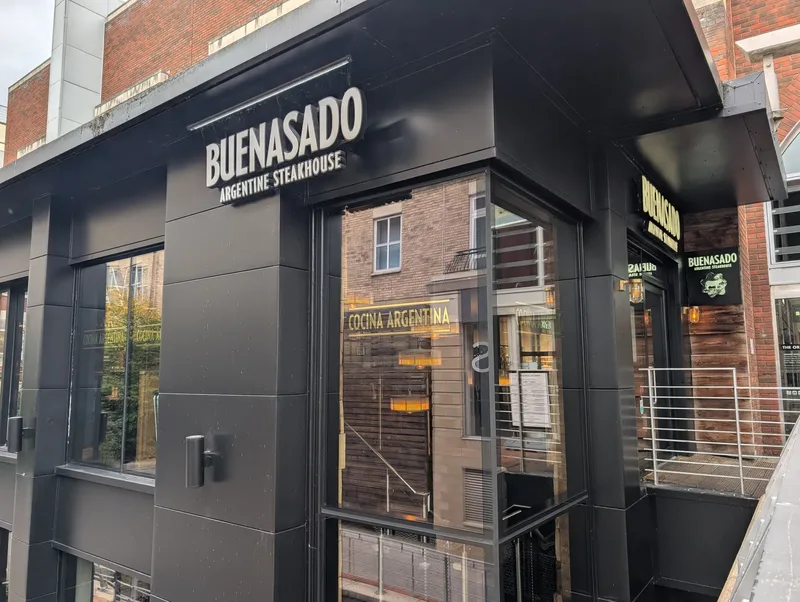
There are two places that seem to always be top of the pops when it comes to eating out in Reading (younger readers can look up that metonym..). According to Trip Advisor's rather dodgy algorithm they are the Whittington Tea Barge and Buesasado Argentinian Grill.
Having tried neither, I decided that it was time to see what impressed the keyboard jockeys so much that they felt compelled to put keys to review and dish out five stars aplenty.
Now, before we go on, a word about the algorithms that have taken over our lives. Once upon a time I had one of those top ratings on TripAdvisor. Back in the days when I used to travel a lot and was rather more hubristic about my ability to influence the world and its travel and eating decisions than I am today.
But my family has always been involved in the hospitality industry and seeing the effect a bad review had on their mental health made me ditch my account and its 7000 reviews and platinum star status back in 2016.
The trouble with online reviews is that people tend to either give five stars or one star. There is nothing in between for most reviewers – and offering just a distribution of one to five is statistically dubious to start off with.
Surely if you give five stars it has to be one of the best meals of your life ? Or is a good bag of chips at Wendy's up there with the oriental duck salad at LBS ? Are Formica tables the same as carpeted rooms with stiff white tablecloths ?
Perhaps I am lacking an egalitarian edge but I now totally ignore Trip Advisor, Google and all the other online review algorithms with purpose. (The fact that you can easily buy the system using review farms in the Philippines also adds to my dubiousness). But there are times where you have to go with the crowd, so down to the back entrance of The Oracle it is.
Now, as a Welshman you always feel an empathy with Argentina. Whilst the Irish went to America and the Scots went to Canada in search of their fortunes, the Welsh went to Argentina. In Patagonia you will still find Welsh schools, and teahouses in the shadow of the towering Andes in Chubut will serve you 'tê bach'. My mother often visited 'Y Wladfa' and it has become a place of pilgrimage for many Welsh speakers.
What the Welsh settlers were able to do was tame the vast pampas and turn them into viable farmland (the land was given to them by the Argentinian authorities who thought that it was worthless). As soon as the settlers had tamed this wild landscape the authorities quickly reasserted their control, of course.
In my teens I remember writing a short story about two soldiers meeting during the Falklands conflict and discovering that they share a language and half a culture in common. So, yes, I have a soft spot for everything Argentinian. After all, snow covered mountains, great wine, the best meat and rugby are all close to my heart.
Argentina is home to the original cowboys - the gauchos who headed cattle on the endless pampas. It was they who started the tradition of cooking over fire with the asado - the slow, smoky ritual that remains at the heart of Argentinian life and cuisine.
The asado is not just a barbecue; it’s a social ceremony, a declaration of patience and pride, where every cut of meat is treated with attention and care, turned over and over until it reaches smoky perfection. Apparently even the motorway caffs in Argentina have asados.
If France gave the world culinary finesse, Argentina gave it cooking with fire. You can take your South African braai and your southern US firepits, in an age where cooking over open fire has become a Michelin starred night out in London (Welsh chef Tomos Parry being at the head of this trend), it was always the star of the show in Argentinian cooking.
The country’s food culture is anchored in meat, but also in the artistry of simplicity. The gaucho’s grill, or parrilla, has been exported across continents, to New York, London, Tokyo and Reading, alongside chimichurri, that simple sauce of parsley, garlic, vinegar, and olive oil which you can now get bottled in Tesco.
To be fair, Argentina’s contribution to world cuisine isn’t just about beef. Its identity is a real fusion - when waves of Italians arrived in Buenos Aires in the late 19th century, they brought pasta, pizza, and gelato. The locals adapted these with gusto, creating something unmistakably their own. Today, Argentina has its own pizzas and pastas - ravioles, ñoquis, tallarines.
Then, of course, is the Spanish influence and the empanada, the humble pastie that has circled the globe. Every region in Argentina claims its own version: spicy beef in Salta, sweet corn in Tucumán, juicy chicken in Córdoba. What began as a portable lunch for labourers now appears on menus from Madrid to Melbourne, something that the oggie never quite managed to do.
And let’s not forget dulce de leche, Argentina’s sweetest export, that silky caramel spread born, legend says, from a cook’s accident in a 19th century Buenos Aires kitchen. It now fills croissants in Paris, swirls through gelato in Rome, and appears on cheesecakes in Brooklyn. Paired with alfajores—soft biscuits sandwiched with the same sticky gold—it represents Argentina’s genius for taking the simple and making it sublime.
Even Argentina’s drinking culture has been making waves of late. Mate, the bitter herbal tea traditionally drunk with a special metal straw from a gourd, is now attracting queues in Soho as it becomes the latest drink craze. sipped from a shared gourd, has become a symbol of community and mindfulness across the world, now embraced by wellness influencers and footballers alike. And of course, there’s Malbec - the once-forgotten French grape that found its true home in Mendoza’s high-altitude vineyards. It has come to dominate supermarket shelves with its deep bodied taste and keen pricing.
So, we approached with some anticipation and were not disappointed.
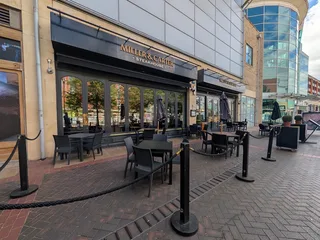
This is a handsome restaurant, all chrome and wood and black and silver on two floors by the Gun Street entrance to the Oracle. It sits beside what is left of Mill Brook and is a steak restaurant from casting central. It is what I think most people – certainly most men – think a steak restaurant should look like - masculine, with the few banquets giving the air of a gentleman's club.
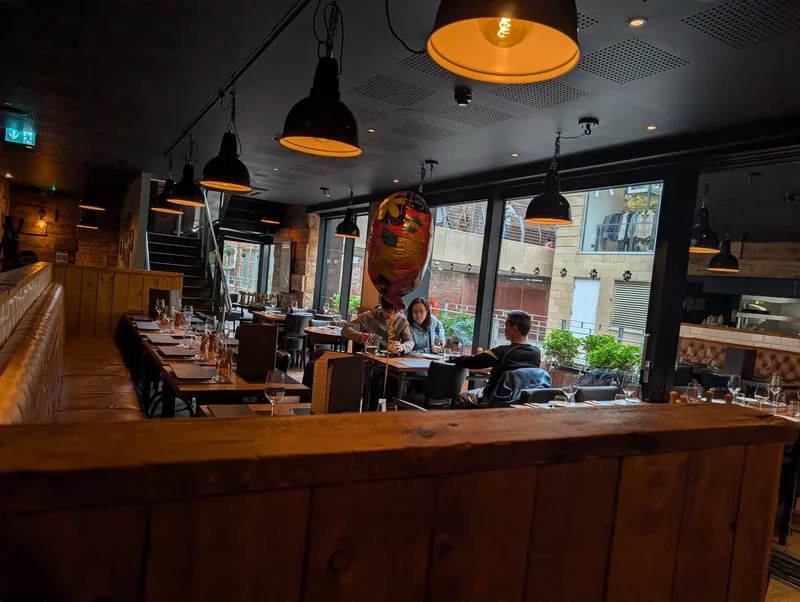
The service is tip top, attentive but not intrusive. And the food is excellent.
There are not a lot of places where we can take our nephew and niece since they are both very fussy eaters, and she is vegetarian - I felt a bit uncomfortable and apologetic as we sat opposite a full wall image of a cow showing the cuts of meat us carnivores were about to consume.
Let me state the obvious, this is not a restaurant for vegetarians. However, with a choice of skinny chips, fat chips and mash and a good array of veggie sides - we had the broccoli, spinach and green beans, the kids were more than happy.
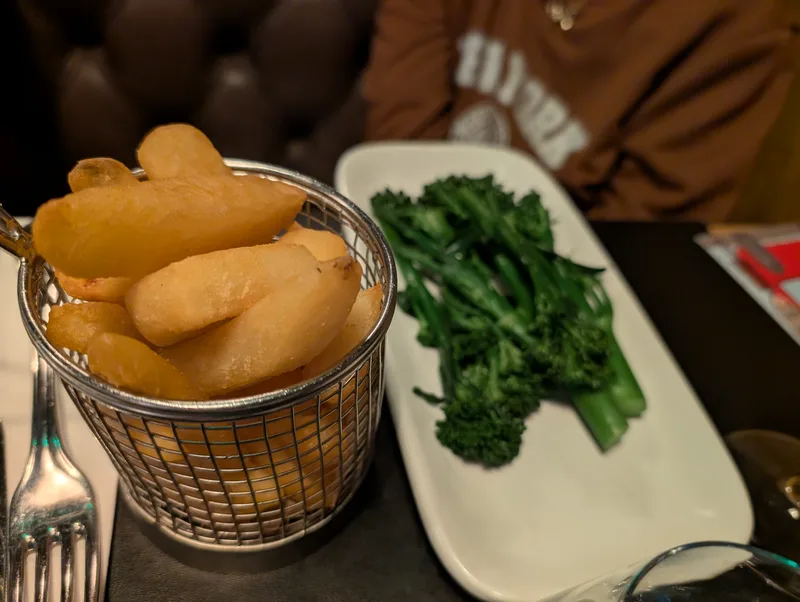
Indeed my nephew, who is prone to spend a lot of time on his ipad, showed early promise as a future Google reviewer when, unprompted, he gave his kids burger, mash and broccoli an average of 9.75 out of 10, asking if he could come back. My niece consumed a whole plate of broccoli, two baskets of fat fries and then declared the additional basket of skinny fries 'the best'. Happy days.
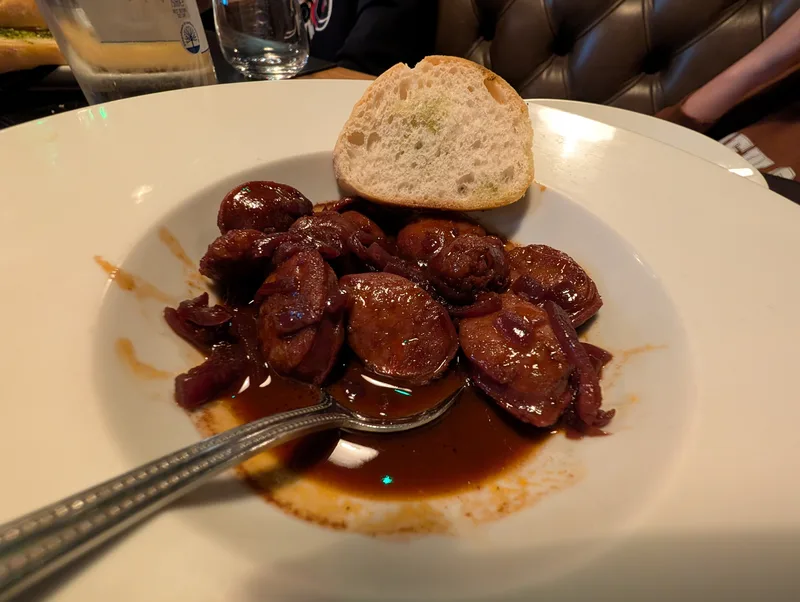
Whilst waiting for my wife to finish her Saturday morning chores I indulged in the garlic bread - delicious soft and crunchy ciabatta - which was largely consumed by my nephew - with a generous folio of spare garlic herby butter on the side and their chorizo in wine and onions, which was utterly delicious, soft and sweet with a depth contributed by the rich wine.
As you might imagine, the wine list is extensive and dominated by Argentinian reds. Malbecs are the new CabSav, after all. I enjoyed a Patagonian Sauvignon Blanc and the house Patagonian Malbec, both of which were highly serviceable.
For the main course you can go for lamb or swordfish or burgers. But why would you ?
This place is all about the steak, which is all imported from Argentina, not good for the air miles, but genuine.
You can select four cuts in three weights, and even super size by 50gm increments.
The basic 8oz is plenty for most people and comes with a choice of carbs.
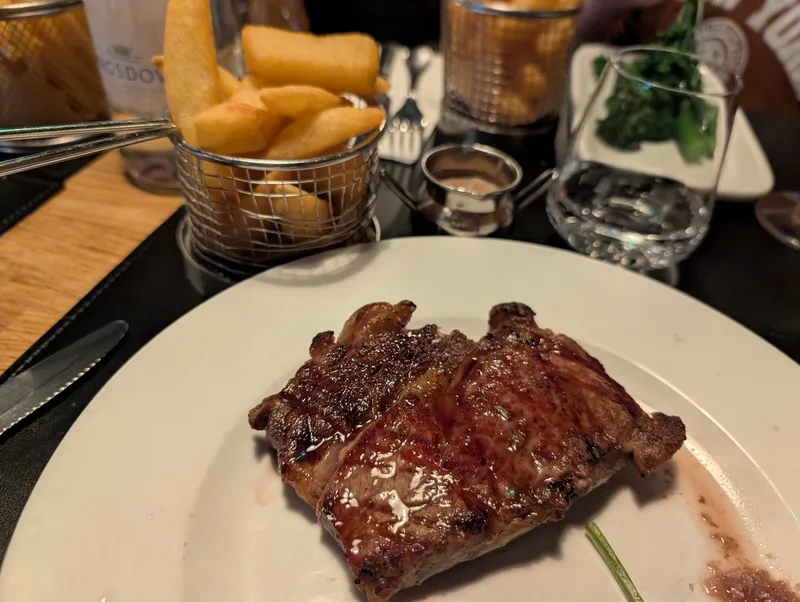
My wife went for the rib eye and I selected the sirloin with fat fries. Given how much beef costs in the supermarket these post Brexit days, the prices are very reasonable, starting at around £19 for a small rump. If you're feeling greedy and indulgent you can go big and start hitting the big bucks, but there is honestly no need.
The veggies, sides and sauces are on top. We had bearnaise and peppercorn, having totally forgotten that chimichurri should have been de facto. Oops, but a good excuse to come back very soon.
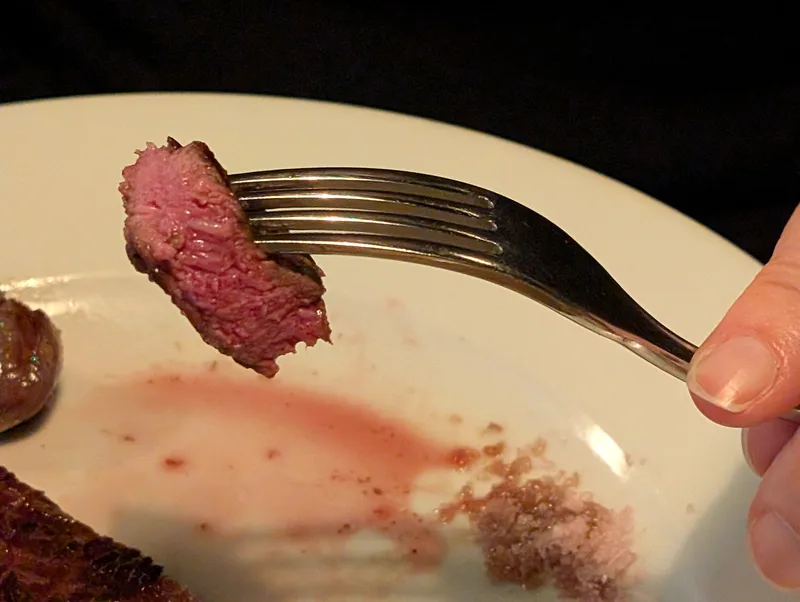
You can seriously go large and have a steak sampler board or a grill on the board of mixed meats for between £32 and £45 per head, then pretend that you are out on the pampas with the dusty cold breeze from the Andes filling your nostrils with the smell of smoke and crisping meat from the asado to the strains of a gaucho strumming a Spanish guitar, rather than about to spend the afternoon in a shopping centre.
Buenasado is an accomplished venture. It does what it says on the tin with aplomb. For once I have to agree with the online reviews. This is one of the best restaurants in Reading.
Comments
No comments yet. Be the first to share your thoughts.
Join the conversation
Log in to leave a comment on inReading.