
Very few of us living in Reading realise how much of the region is owned or controlled by the local University. Over the past decade, Reading has moved from being a solid if unspectacular British research university into a bold experiment in territorial reinvention, revenue diversification and global ambition, generating controversy and antipathy in its wake.
If Reading’s traditional strengths — meteorology, environmental science, business education — still anchor its reputation, they are now overlaid with an ambitious slate of development strategies. In these straitened days for higher education with threats coming from our own government's immigration policies, inflation, increasing global competition and a general devaluation in degrees and higher degrees in general in the wake of factors such as AI, it is perhaps only prudent that the University of Reading is looking after its balance sheet. But is this right for an academic institution ?
Reading currently maintains an investment asset portfolio of £307.6 million. While this represents a reasonably robust position for a mid-tier UK institution, which has helped the university narrow its annual operating loss to £10.8 million, it highlights a chasm when placed on the scales of international finance.
Within the UK, the University of Reading sits comfortably in the upper-middle tier of wealth, but remains dwarfed by the "Oxbridge" behemoths. For the fiscal year ending July 2025, the University of Oxford reported a total consolidated endowment (including its constituent colleges) of £9.28 billion. To put that into perspective, Oxford’s endowment is roughly 30 times larger than Reading’s.
A single Oxford college, St John’s, holds an endowment of approximately £790 million—more than double the wealth of the entire University of Reading.
The comparison becomes even more stark when looking across the Atlantic. While Reading manages a portfolio in the hundreds of millions, top-tier US institutions operate with sovereign-wealth-level capital. As of the 2025 fiscal year, Harvard University remains the wealthiest academic institution in the world, with an endowment valued at $56.9 billion (approx. £44.9 billion) and the University of Texas has £34 billion in its coffers. Much of this wealth comes from donations from alumni, something nearly unheard of in the UK.
So, it is therefore perhaps not surprising that the University has become involved in extensive commercial activities to copmpete in what is a global academic market.
The uni's commercial ventures range from garden village planning on thousands of acres of its farmland to the development of world-class film and TV studios, overseas campuses and global brand building. At its centenary, let's take a deep dive into the uni's balance sheet.
'Cine Valley' and Shinfield Studios: Hollywood on the M4 ?
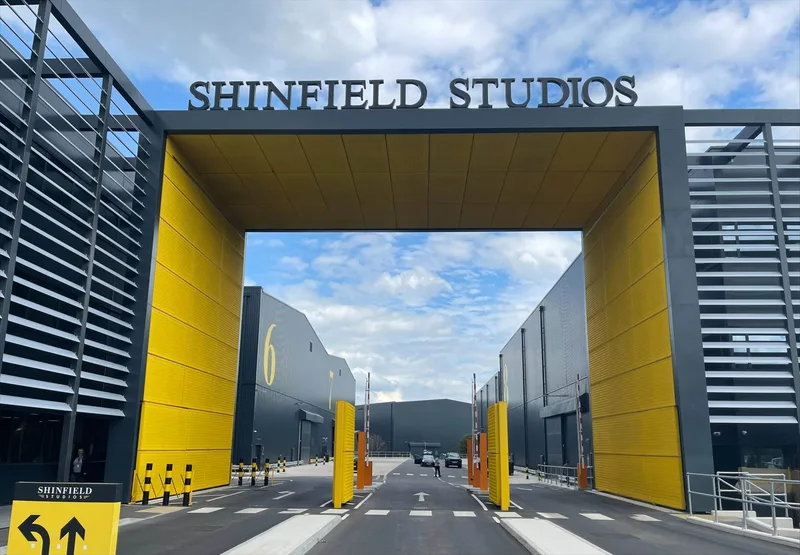
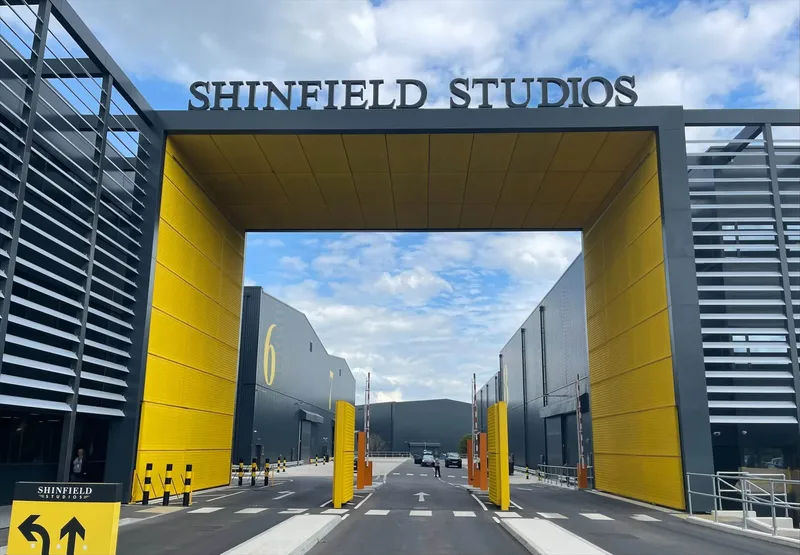
On land owned by the University of Reading at the Thames Valley Science Park - a business park the university has been developing since the mid-2010s - is Shinfield Studios, a major film and television production campus with 18 sound stages, workshops, office space and backlot facilities.
Originally announced with a long-term lease to LA-based investors and promoter Commonwealth Real Estate and envisaged as part of a broader “Cine Valley” hub, Shinfield Studios is now one of the UK’s significant new film production centres outside the traditional hubs near London and Pinewood. amonst productions completed or in progress are:
Ghostbusters: Frozen Empire (2024): One of the first major productions to use the site; the studio was used to recreate New York City streetscapes.
Greenland: Migration (Expected 2026): The sequel to the Gerard Butler disaster thriller Greenland utilized the stages for its post-apocalyptic sequences.
The Magic Faraway Tree (Expected 2026): An adaptation of the Enid Blyton classic starring Claire Foy and Andrew Garfield.
The Acolyte (Disney+): This Star Wars series used Shinfield as its primary production base, including the construction of a large exterior set on the backlot.
Queen Charlotte: A Bridgerton Story (Netflix): Used the studio's soundstages for interior sequences of Regency-era London.
The Agency: A political thriller series starring Michael Fassbender (remake of Le Bureau des Légendes).
Squid Game: The Challenge (Netflix): Parts of the reality competition were filmed utilizing the studio's vast stage space.
Entertainment & Game Shows
Interestingly, despite being a cinematic hub, the studio has also hosted several high-profile UK TV shows:
99 to Beat (ITV): A game show hosted by Adam and Ryan Thomas.
LOL: Last One Laughing UK (Amazon Prime): The UK version of the global comedy format.
You Bet! (ITV): A revival of the classic 90s challenge show.
Its proponents sell Shinfield as a £200m-plus investment expected to generate substantial inward economic activity — estimates have been as high as £500m per year — and thousands of jobs, both direct and indirect. However, in an era where a lot of production is now moving to data centres using AI, its long term viability is yet to be proven.
Reading’s own 2023–24 financial statements framed the development as a strategic play: the studios help Reading pivot toward a creative economy cluster and expand employment beyond academia. The University does have courses in BA Film & Television: Focuses on filmmaking, TV studio production, cinematography, editing, and screenwriting, BA Film & Theatre: A joint approach exploring both screen and live performance, including set design and directing, BA Creative Writing: Often taken alongside English Literature or Art, focusing on narrative craft for various media and postgraduate courses in MA Creative Enterprise (Film or Theatre Pathways): A unique "cross-over" degree combining artistic practice with modules in management, law, and entrepreneurship from the Henley Business School, MA by Research (Film, Theatre & Television): A flexible, research-intensive programme where you can focus on a specific practical project or a theoretical dissertation, MA Fine Art: Focuses on contemporary professional practice, exhibitions, and curatorial initiatives and MA Communication Design: Pathways in Graphic Design, Book Design, and Typeface Design (Reading is world-renowned for typography).
The facilities for the British Museum and the Natural History Museum are also located at the Thames Valley Science Park (TVSP) - it is important to distinguish this from the Thames Valley Park (confusingly called TVP), which is a separate commercial site in East Reading - home to Microsoft and Oracle - that the University does not own.
The University of Reading holds the freehold of the land at the Science Park. The museums have established themselves there through long-term partnerships and lease agreements.
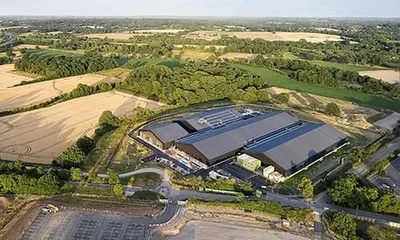
The British Museum Archaeological Research Collection (BM_ARC), officially opened in 2024.
The Natural History Museum's "Science and Digitisation Centre" is currently under construction at TVBP, with the groundbreaking ceremony having taken place in September 2025. This project is backed by over £200 million in government investment and sits on land leased from the University.
These facilities are part of a strategic research partnership. By co-locating, the museums can collaborate with University scientists on genomics, climate change, and archaeology; provide research opportunities and placements for University of Reading students and centralize their most fragile and important collections in high-tech, climate-controlled environments that are more modern than their historic London basements.
TVBP also houses The Gateway Building, an innovation center for health-tech and environmental startups and Rutherford Cancer Centre, a high-tech medical facility.
Critics have questioned whether promises of local jobs and skill pipelines — including apprenticeships and Screen Berkshire training initiatives — will materialise for current residents or primarily benefit external contractors and high-skill migrants.
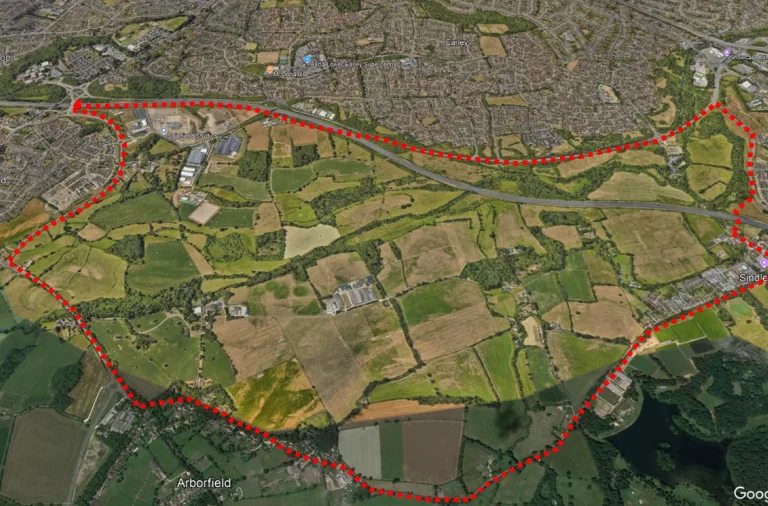
In March 2025, the University, in partnership with private developers, unveiled plans for Loddon Garden Village, a proposed mixed-use community between Shinfield, Arborfield and Sindlesham, poised to deliver approximately 4,000 homes along with schools, employment space and civic infrastructure. The university’s role stems from its position as trustee of Hall Farm, land it owns through the National Institute for Research in Dairying (NIRD) Trust.
The farm was purchased in 1947 by the NIRD. At the time, the Institute needed to expand its farming activities beyond its original site at Church Farm in Shinfield. The 299 acre Arborfield Hall Farm was acquired primarily to provide additional grazing land and forage crops for young livestock.
The NIRD was a research body closely associated with the University. While it operated as a distinct entity for many years, the University of Reading acted as the sole trustee of the NIRD Trust. This meant that while the land was technically held for the specific purpose of dairy research, it was under the University’s administrative umbrella.
In March 1985, the NIRD was officially dissolved as a separate research institute. Its functions and assets, including Hall Farm, were re-absorbed directly into the University of Reading. This transition consolidated the farm into the University's School of Agriculture, Policy and Development.
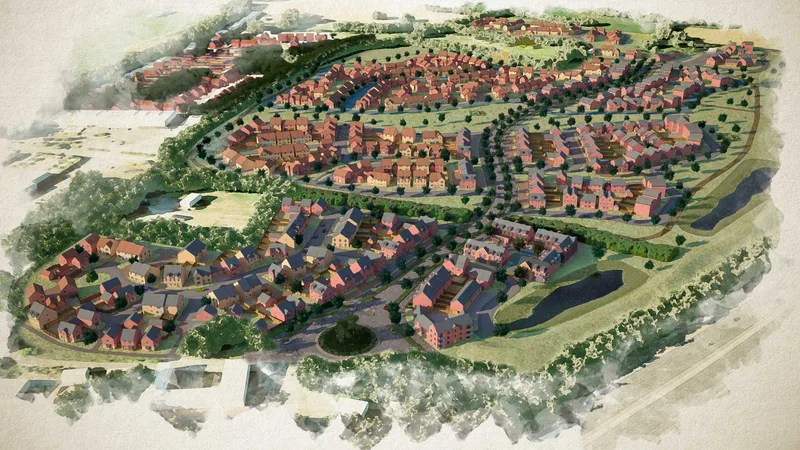
To its advocates, Loddon is a model for holistic, sustainability-led development: energy-efficient housing, integrated schooling and a massive new country park larger than Dinton Pastures, linked to existing green spaces. The scheme’s architects and supporters in local government position it as a generational opportunity to rebuild the region’s physical fabric and generate employment opportunities in s region where there is substantial demand for housing.
Yet opposition has been fast and often visceral. Campaign groups like Save Our Loddon Valley Environment (SOLVE) argue that the submission fails national planning tests, including inadequate consideration of flood risk and infrastructure delivery — points raised by independent planning consultants in public examinations.
Some local representatives and residents express a distinct sense of betrayal. Shinfield, once a verdant village just south of Reading, now increasingly resembles a semii-urban town, as farmland gives way to housing estates and commercial developments. As one Wokingham councillor put it bluntly in 2021: “The University of Reading has turned Shinfield from village to town.”
And this is not merely a quibble over development. At stake is the university’s reputation and role in shaping the region’s economy, whilst guarding its own coffers. For decades universities have been humdrum generators of human capital and research; now Reading is becoming a generator of actuarial risk, transport headaches and traffic modelling debates — responsibilities formerly well beyond their brief. The very fact that a university serves as a master planner for nearly four thousand homes underscores how higher education institutions are evolving into actors in regional urban development, not just observers of it.
Overseas Expansion and the Malaysia Campus: Global Ambitions or Global Missteps?
Long before Loddon or Cine Valley made headlines, Reading pursued a different kind of geographical expansion: international campuses.
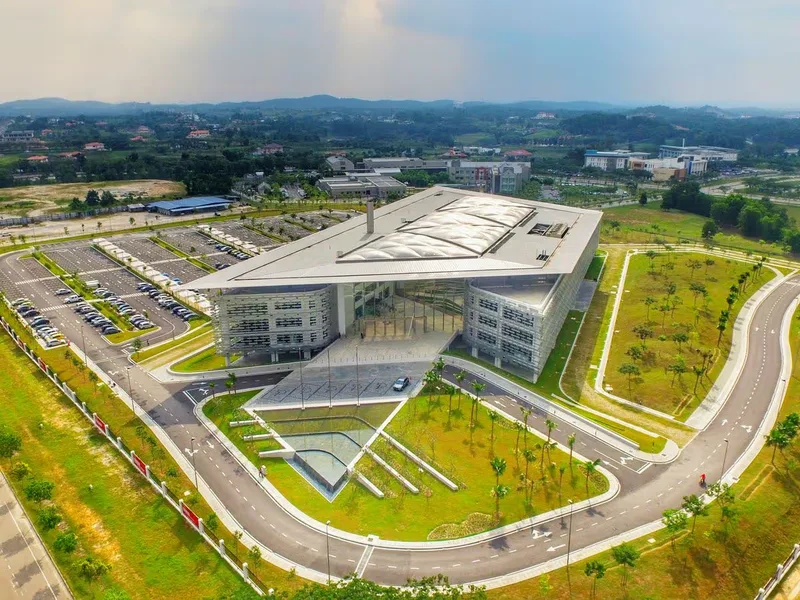
The jewel in that strategy is the University of Reading Malaysia (UoRM), launched in Educity, Iskandar Puteri, near Singapore. On the surface, this branch campus has flourished. Started with a few hundred students, UoRM saw its enrolment swell to record highs — nearly 950 students in 2024/25 — and celebrated its first decade alongside the UK campus’s centenary ambitions.
But beneath the celebratory press releases lies a more complicated narrative familiar across the UK sector: overseas campuses can be strategically valuable yet financially fraught.
In the late 2010s, investigative reporting and sector analyses flagged that Reading’s Malaysia campus had been slower to recruit than expected and had incurred higher costs than anticipated. Critics suggested that expansion was undertaken without sufficient market analysis, undershooting demand forecasts and overestimating local economic conditions. Whether this represents a learning curve of a globalizing university or a cautionary lesson about export-oriented education ventures remains a subject of debate among governance analysts and staff. The UK government's policies, scrambling to appeal to the extreme right and curtail immigration has also dented the UK's brand as an academic provider.
In 2026, the UK government ditched its target of attracting more international students, instead urging institutions to open campuses abroad to diversify revenue and reduce universities’ reliance on fees from overseas enrolments at home. For Reading, this means its Malaysia campus — and ambitions for further global partnerships — may gain new strategic value even as domestic student recruitment becomes more competitive. But the 'UK uni' brand may not be seen as attractive to stuents hoping to study, and perhaps obtain jobs in the UK.
The Global Classroom: International Students and Institutional Risk
Reading today hosts a truly international student body - approximately 27–28% international students, well above the UK average, drawn from over 160 countries. International students are not merely a cultural asset; they are a strategic lifeline. Their fees contribute disproportionately to university revenues at a time when UK government teaching grants have been frozen for years and domestic fee caps remain largely static.
China is the largest source countries for the University. This is bolstered by the NUIST Reading Academy, a joint partnership with Nanjing University of Information Science and Technology. Many Chinese students study at the Reading campus for the final year(s) of their degrees, particularly in sciences, business, and economics.

But dependency on foreign students carries risk. National immigration politics, visa policy tightening and broader debates about overseas student numbers once buoyed universities’ finances, but are now limiting growth prospects. Reading is hardly unique in feeling these headwinds, but its relative financial exposure to international income and its overseas campus investments make it a bellwether for mid-tier research universities navigating a volatile post-Brexit, post-pandemic environment.
Student accommodation pressures compound the challenge. Local planning authorities have rejected large private developments outside campus boundaries on grounds they are inappropriate for educational use, reflecting tensions between community character and the university’s expansion needs and on campus development have often been controversial - the proposed redevelopment of St Patrick's Hall drew severe criticism from local MP, Matt Rodda. This underscores a broader structural question: if universities are growth engines, are they also responsible for the infrastructure and housing that growth demands?
The University of Reading stands at an inflection point familiar to many modern universities all over the world: the push to globalise, commercialise and diversify rendered through strategies that often strain local relationships and institutional coherence.
From Loddon Garden Village and Shinfield Studios to an ambitious international presence in Malaysia, Reading’s leadership is embracing a vision of a university that is economic actor, regional developer and global brand. Whether this translates into sustained academic excellence and community goodwill — or becomes an overextension that dilutes academic focus — is an open question.
What is clear is this: Reading is no longer a quiet provincial university. It has become a case study in the ambitious reinvention of higher education, where the stakes are intellectual, economic and cultural — and where the conversations it now commands extend far beyond the green lawns of Whiteknights Park.




Comments
No comments yet. Be the first to share your thoughts.
Join the conversation
Log in to leave a comment on inReading.