
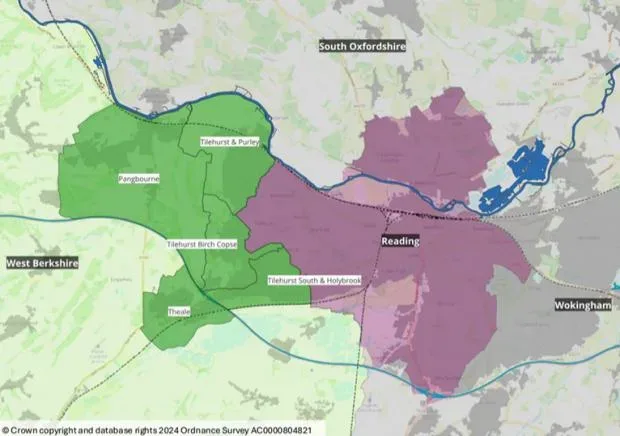
Residents of Theale are heading to the polls next week to cast a crucial vote on whether their village should remain under West Berkshire Council (WBC) or be absorbed by Reading Borough Council (RBC). The Parish Poll, scheduled for Thursday, November 6th, is the latest flashpoint in the escalating political row over local government boundaries.
Reading Borough Council’s proposal is to expand its borders to create a "Greater Reading" authority, which would encompass key surrounding areas currently governed by West Berkshire. The areas targeted include Theale, along with Calcot, Tilehurst Parish, Purley-on-Thames, and Pangbourne.
RBC leaders argue these areas are effectively urban suburbs of Reading and form part of its natural economic area. They contend that the current boundary, drawn over a century ago in 1911, no longer reflects the reality of where people work, shop, and use services.
Councillor Liz Terry, Leader of Reading Borough Council, has stated that including these areas in an expanded Reading borough makes more sense than forcing them into a larger, predominantly rural new authority, which they claim would be the result of WBC’s own reorganisation plans.
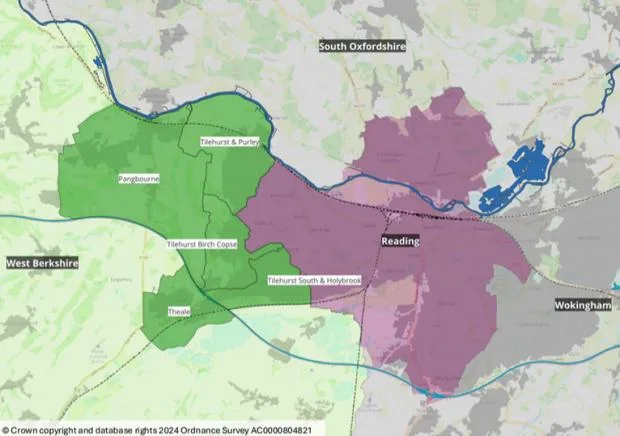 The Proposed Expansion
West Berkshire Council has been vocally opposed to the move, branding it a "hostile and unsolicited attempted land grab."
WBC’s own proposal is to merge with South Oxfordshire and Vale of White Horse councils to create a new ‘Ridgeway Council’. WBC argues that the communities along the border see themselves as integral parts of West Berkshire.
Councillor Jeff Brooks, Leader of West Berkshire Council, has consistently stressed that these communities have never, and should never, fall under Reading's jurisdiction.
Theale Residents to Have Their Say
The Parish Poll in Theale was initiated after a well-attended parish meeting earlier this month. The vote will give registered electors in the village a chance to directly voice their preference.
The question on the ballot will be: “Do you wish for Theale to remain within the West Berkshire Council boundary?”
While the result of the local poll is not legally binding, it will serve as a powerful democratic indicator for the ultimate decision-maker—the Secretary of State for Local Government. The outcome will carry significant weight as the government considers the various proposals for Local Government Reorganisation across the region.
The poll is set to take place between 4pm and 9pm on Thursday, November 6th, 2025.
What Happens Next?
The boundary dispute is a direct consequence of the ongoing pressure for local government reform across England. With the final decisions for both the ‘Ridgeway Council’ and the ‘Greater Reading’ boundary review still to be made by the government, the democratic choice made by Theale residents next week will add some local participation to this high-stakes political debate, but the ultimate decision on the boundary change remains with the Secretary of State for Local Government.
West Berkshire Council (WBC) and its partners (South Oxfordshire and Vale of White Horse) are due to submit their final, detailed proposal for the new ‘Ridgeway Council’ unitary authority by Friday, November 28, 2025.
Reading Borough Council (RBC) will submit its formal request to the Secretary of State for a Principal Area Boundary Review (PABR) to modify the border and absorb Theale (and other parishes) into a 'Greater Reading' authority timed to coincide with the Ridgeway proposal, we understand.
The Theale Parish Poll result will be officially included by WBC as crucial evidence demonstrating local sentiment.
There is a precedent for this, albeit from the distant past, when Caversham was transferred from Oxfordshire to Reading on 9th November 1911.
Government Feedback
The Secretary of State and MHCLG officials will then review both the Ridgeway Council proposal and RBC’s boundary change request. This situation is further complicated by the larger scale proposal to create a Thames Valley Authority stretching from Slough to Swindon with its own mayor and increased local powers.
The government will judge the proposals against statutory criteria, including creating new unitary authorities that are of an appropriate size (generally larger, serving a larger population) with proposals based on sensible economic and geographical areas.
Evidence of local support for the change. (The Theale poll strongly supports the WBC position on this point).
There are no decision-points prior to the submission of the final proposals.
If the government decides to take one or both proposals forward, it is legally obliged to carry out a Statutory Public Consultation.
This is a formal, government-run process where all affected councils, community groups, and the general public will be invited to submit their views on the specific proposal(s) being considered for implementation.
The consultation process is essential before any proposal can be implemented.
Once the statutory consultation is concluded, Ministers will decide which, if any, proposal is to be implemented (with or without modification).
The final decision will then be subject to Parliamentary approval.
The entire reorganisation process, if approved, would likely not come into full effect until 2027 or later, allowing for a transition period, when we will be on the cusp of another election and everything may change once more.
Comments
No comments yet. Be the first to share your thoughts.
Join the conversation
Log in to leave a comment on inReading.