
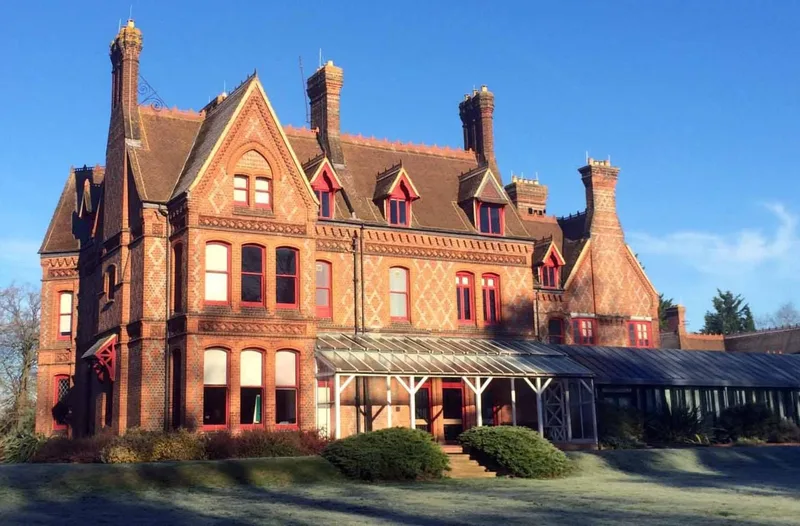
This year marks the 100th anniversary of one of the town’s biggest employers and most important institutions: the University of Reading. This month we take a deep dive into the history and future of this institution.
Every year since 17 March 1926, thousands of teenagers – and mature students – have made Reading their home for at least three years of study. The campus offers a wide range of degrees in disciplines that include art, agriculture, history, meteorology, computer science, chemistry, and typography. Its courses are renowned and its academics in demand when the media need expert voices.
The University has evolved, just as the town has. Courses, halls of residence, lecture halls, the library, and the students' union have all seen upgrades over the years. While many of the buildings, especially on the London Road campus, look the same on the outside, changing technology, times, and demands keep it relevant.
Staff at the University have always sought to ensure the students are part of the town’s life, after all many make Reading their home once their studies are over. This means that many residents will have their own memories of life on campus to share, whether it's their hall of residence, walking around Harris Gardens, graduation at the London Road campus, or taking part in sporting activities.
Throughout this year, several special events will be held to help the town celebrate the University's work and its role in Reading’s story over the past century. Last year, many alumni submitted their memories to help shape a new celebration that will go on display online and across the Whiteknights and London Road campuses. The trail of curated pictures has been organised by arts collective jelly and helps tell the story of many students’ happy memories.
One way to catch a glimpse of this is through special heritage tours the University is organising throughout the year. They will highlight historic campus buildings, beautiful green spaces, wartime history and generations of voices of the people who have studied, worked, and lived at the University, helping to inspire the institution to this day.
They run on different days and times, and cover different subjects, including the history of different parts of campus such as Foxhill House, Earley Gate, and the London Road base. There will also be focuses on the University’s RAG (raising and giving) parades – the climax of fundraising weeks – and the university’s role during wars.
Molli Cleaver, Community Engagement Manager at the University of Reading, said: "Our Centenary is such a special occasion to connect with our local community. We really want everyone to be part of our celebrations.
“We know there is so much interest in the history of the University, our people and our campuses and buildings. The Centenary Heritage Tours are a unique opportunity to step into our rich history and learn more about the university on your doorstep.”
Places are free, but must be booked from Eventbrite. Some of the tours are run by Terry Dixon, and he requests a donation for Reading-area charities. https://www.eventbrite.com/cc/centenary-heritage-tours-4799755?utm-campaign=social&utm-content=creatorshare&utm-medium=discovery&utm-term=odclsxcollection&utm-source=cp&aff=escb
The Museum of English Rural Life is also joining in with some centenary celebrations for the Campaign to Protect Rural England. Based on the London Road campus opposite the Royal Berkshire Hospital, MERL is an absolute unit when it comes to charting life in the country.
The exhibition highlights CPRE's major achievements over the past century, including the creation of England's national parks and green belts, campaigns to limit light pollution and litter, regulation of housing development, advocacy for local food production and more.
Dr Ollie Douglas, Curator of MERL Collections, said: "This exhibition tells the story of one of the most influential conservation charities in England's history.
“For 100 years, CPRE has been at the forefront of protecting our countryside, from creating the national parks we still treasure today to fighting for dark skies and green spaces. We're proud to celebrate their centenary and show how grassroots campaigning has shaped the rural landscapes we all enjoy."
Alongside Voices of the Countryside, The MERL is launching Radical Rural, a trail through the museum's galleries highlighting additional movements, artists, and writers who champion rural England's people and places. The contents of the trail range from rural artworks and protest banners, to a costume of Old Crockern, the legendary folk spirit who protects Dartmoor.
The Voices of the Countryside exhibition and the Radical Rural trail both run until 24 May.
There are several other events in May.
The now annual Community Festival will be held on Whiteknights Campus on Saturday, 16 May. The free event features a range of activities for all ages including performances, tours, games and food.
A real blast from the past comes in the form of a RAG Parade. For more than 50 years, it was a highlight in the university’s calendar as students and the wider Reading population came together to raise funds for good causes. While most people will think of the RAG Mag – a collection of jokes and curiosities – and bed pushing, for others the parade will be what they recall.
For one day only, this parade is set to return, and the University is hoping that students, staff and alumni will put on an event that the Reading community will remember. It is set to take place on Sunday, 17 May.
A week later, the Whiteknights Campus is to become a theatre set for a specially commissioned promenade production that celebrates student life.
Sparks, Parks, Halls & Balls recreates the bustle of a 1950s common room, the energy and protest of the 1970s, and the unmistakable sounds of the 1990s – bringing past moments vividly into the present. The stage is the campus and as audiences walk through the site, they can encounter stories, memories and moments that reflect the lives of those who have studied, worked and gathered at Reading over the last hundred years.
The play is part of South Street Arts Centre's acclaimed SITELINES programme, which creates immersive theatre in unusual locations.
Professor Robert Van de Noort, Vice-Chancellor of the University of Reading, said: "Our centenary is not just about marking a date in history. It is about recognising the people, ideas and everyday moments that have shaped this University over a century. This production will capture that spirit in a unique way.”
The project has been made possible by a grant from the University’s Centenary Fund, secured by Rachel Helsby, Head of the Chancellor and Vice-Chancellor’s Office, who is also co-producing the production.
She said: “By working with SITELINES, we are inviting audiences to experience our campus in a new way, through stories rooted in real memories and real places. It is a celebration of community, creativity and the shared experiences that continue to define Reading.”
There will be six performances from Friday, 22 May, to Sunday, 24 May, and numbers are strictly limited. They can be booked via the Reading Arts website, https://whatsonreading.com/venues/sitelines/whats-on/sparks-parks-halls-balls
May’s celebration events come to an end on Saturday, 30 May with a special day of sporting action as alumni return to participate in a series of sporting matches against current students.
For more details on the events planned, log on to: https://www.reading.ac.uk/centenary/

Comments
No comments yet. Be the first to share your thoughts.
Join the conversation
Log in to leave a comment on inReading.