
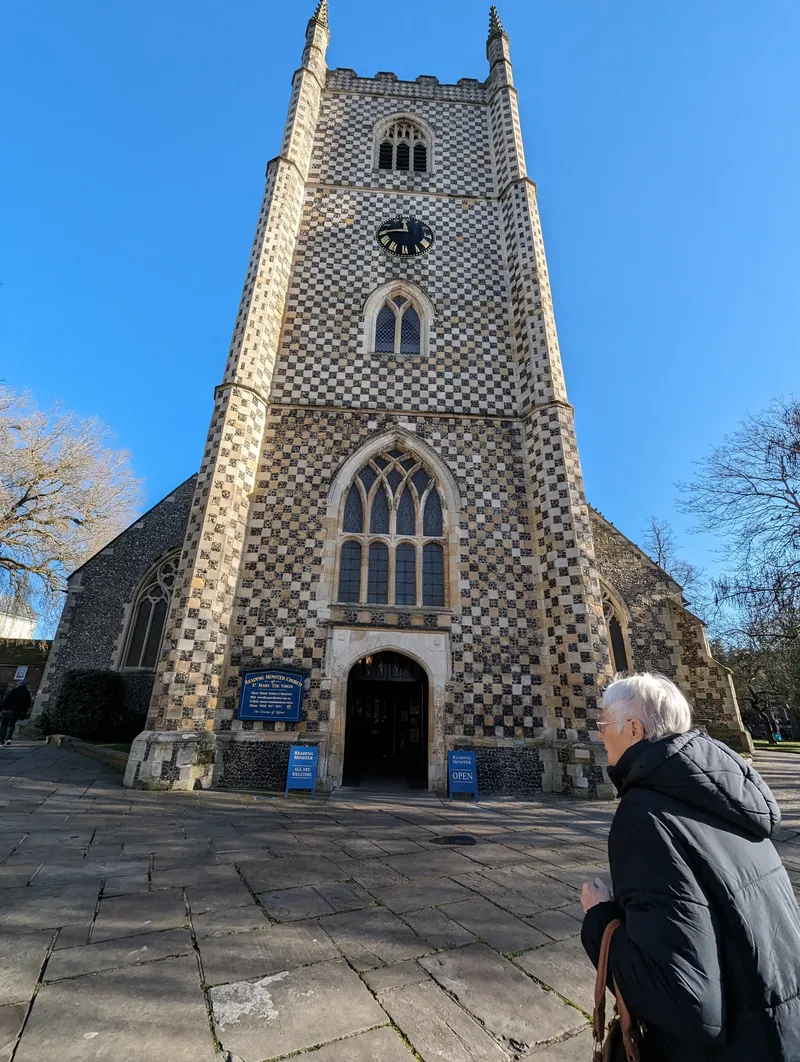
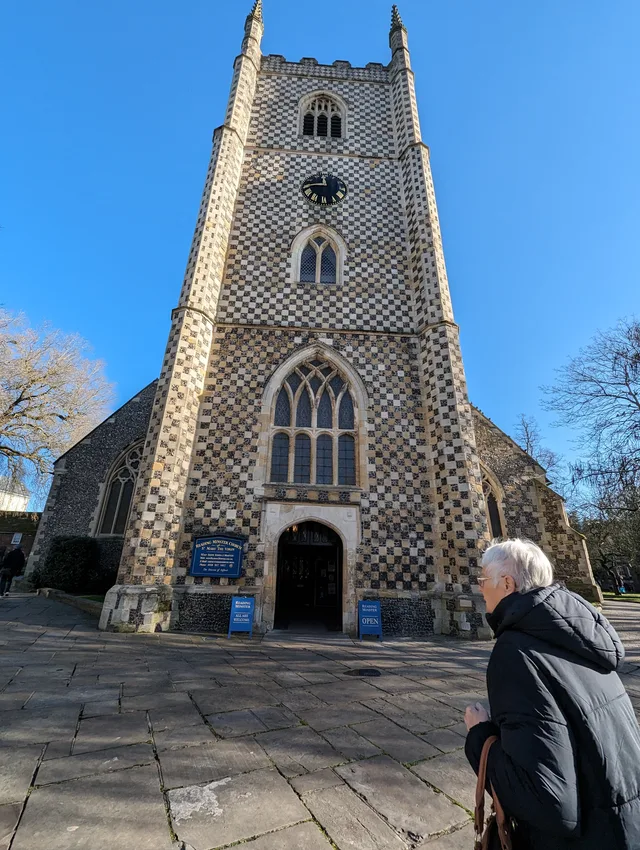
Have you ever wondered why Reading doesn’t have a cathedral? After all, in the Middle Ages it boasted one of the largest Abbeys in the world and was an important Christian centre.
Well, did you know that there are 18 cities in England without a cathedral (technically an Anglican Cathedral – Lancaster, for example, has a Catholic cathedral) and 11 towns which have an Anglican cathedral but do not have city status. Cambridge is perhaps the most famous example of a city without a cathedral and Guildford is a nearby town with a cathedral.
The closest Reading has to cathedral is the Reading Minster of St. Mary the Virgin. The church is familiar to anyone visiting the town, set in its former graveyard. It is a lovely building constructed out of variegated bathstone and flint bricks giving it an unique 'chessboard' appearance. Not too grand, but functional and an important religious and cultural centre for the town to this day set between the eponymous St Marys Butts (named after the church and the archery practice grounds that were a requirement for any urban area in the middle ages to breed a generation of sharp shooting archers) and Gun Street, that infamous location of many a night out in the town.
Minster Street is now a service street between Broad Street and The Oracle, but was once Reading's main thoroughfare, on the road between London and Southampton. It is likely that the far end was renamed Gun Street at the time of the Civil War when there were buildings either side of the street, some home to gunmakers. The buildings on the southern edge of the churchyard were subsequently demolished, leaving the open plan aspect found today.
The church was built on the site of an earlier chapel in 998 by Queen Elfrida, the dowager queen and mother of King Ethelred the Unready. She established a nunnery as an act of repentance for the murder of her stepson, King Edward the Martyr.
The nunnery was eclipsed in 1121 when Reading Abbey was founded by Henry I. The Abbey's Abbot held the dual role of Rector of the Minster, until the Abbey's dissolution in 1538 under Henry VIII's sweeping reforms.
The 14th century saw the establishment of the Jesus Chantry in the north transept, a spiritual sanctuary within the Minster, further adorned by the Colney Chantry founded by Thomas Colney in 1372. After the dissolution of the Abbey, stones and timber were repurposed for the Minster's extensive restoration from 1551 to 1555.
The church at this time had a steeple atop the bell tower, but this was blown over in a storm in 1574 and never restored.
The Victorian era brought a new chapter in the Minster's musical legacy with the installation of the Father Willis organ in 1862. The organ is currently subject to a restoration campaign - you can make a contribution or get involved here.
William de Lincoln was the first Vicar of St. Mary’s in 1173 and the church became the seat for the Bishop of Reading from 1889, with the current incumbent, Olivia Graham becoming the first female bishop in the diocese of Oxford.
Which brings us back to why Reading does not have a cathedral.
Situated between the two dominant diocese of Oxford and Winchester, Reading was never important enough to be the seat of an archbishop and remains part of the Oxford Diocese.
The Minster's churchyard remains, somewhat awash in modern Reading, but still offering a tranquil space for a seat or a wander with its ancient trees and the Jubilee Cross, commemorating Queen Victoria's Golden Jubilee.
Today, the church is progressive in its outreach and role in the town. From Christmas carols to regular concerts, it is even possible to hire it as a unique venue where food and alcohol can be served.
Reading may not have a cathedral, but it does have a cracking church at its centre.
If you would like to hire the church for an event click here.

Comments
No comments yet. Be the first to share your thoughts.
Join the conversation
Log in to leave a comment on inReading.