
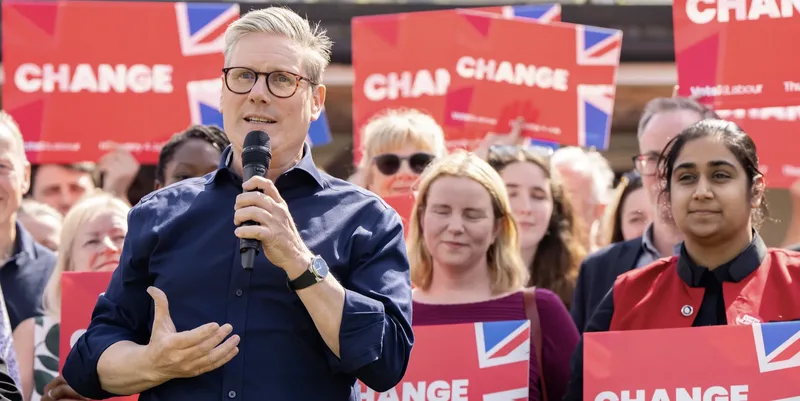
Two seemingly contrasting things are going on in Reading – a significant increase in the ethnic makup of our town and a massive switch away from Labour, traditionally the party representatives of a diverse population.
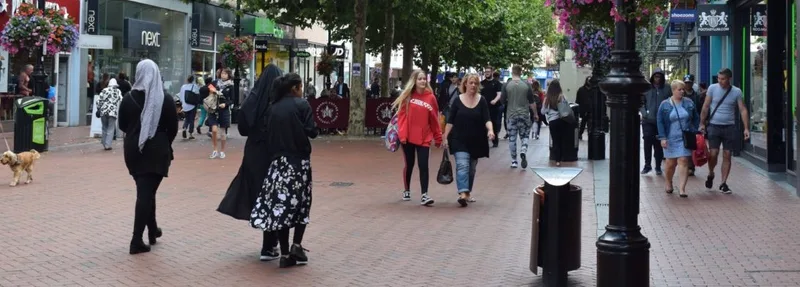
Just walking down Broad Street it quickly becomes apparent that Reading has a highly diverse population. Indeed, the town has probably shifted to become minority white. At a time of increasing tension over immigration, how is this likely to play out in our town ?
At the 2021 Census, 46.5% of Reading's residents identify as belonging to a Black and Minority Ethnic (BAME) community, a broad category that includes some white and other ethnic communities. This figure marks a significant increase from the 35% recorded in 2011, illustrating a substantial growth in the town's non-White British population over the decade. The recent significant wave of immigration from China and Africa has probably seen this figure rise even further to likely represent over half the population in 2025.
Much of this has been driven by the active jobs market in the area for IT and healthcare and it's an inconvenient truth that a society with an ageing population becoming iller and lazier by the day, with fewer and fewer children, needs immigration to shore up its wealth and existing standards of living and service delivery in the NHS and elsewhere (34.4% of the staff at the Royal Berkshire Hospital are from a BAME background). Somewhat ironically, due to the way immigration is measured in the UK, Boris Johnson (born in the US) and Nigel Farage's ex wife count as immigrants, as are probably the last few people who looked after you or a member of your family when you were last ill.
Reading's proportion of BAME residents is among the highest in the South East of England outside of London, just below Slough. Census data is a crude representation of the origin of people living in the U.K., but it does paint a picture of the shifting impact immigration is having on the makeup of our part of the world.
Reading’s Ethnic Makeup
White British constituted 53.5% of Reading's population in 2021. This was a significant decline from 65.3% in 2011 and is considerably lower than the English average of 73.5%. ‘Other White’ accounted for 13.7% of Reading's residents in 2021, an increase from 9.5% in 2011, and is again significantly higher than England's 7.5%.
Individuals identifying with a Mixed ethnic background make up 5.1% of Reading's population, rising from 4% in 2011, and exceeding England's average of 3%.
The Indian community represents 6.2% of Reading's population, an increase from 4.2% in 2011, and almost double England's 3.3%, with those from a Pakistani background comprising 4.8% of Reading's residents, up from 4.5% in 2011, and also higher than England's 2.8%. Other Asian accounts for 6.7% of Reading's population, with its significant Nepali population, increasing from 4.9% in 2011, and substantially above England's 3.5%.
Black Caribbeans in our town are actually decreasing making up 1.9% of Reading's population in 2021, showing a slight decrease from 2.1% in 2011, although still higher than England's 1.1%.
Black African represent 4.4% of Reading's residents, this group has grown from 3.9% in 2011 and is notably higher than England's 2.6%, whereas ‘Black other’ (which largely represents British people of colour) comprises 4.5% of Reading's population, remaining consistent with its 2011 figure of 4.5%, and is higher than England's 2.9%.
The Chinese community at the time of the census accounted for just 1.5% of Reading's population, an increase from 1% in 2011, and higher than England's 0.8%. However a large influx from Hong Kong under right to settle has occurred since then and this figure is now likely to be significantly higher.
The ‘Other ethnic’ group has seen a notable increase, rising from 1% in 2011 to 2.8% in 2021, and is higher than England's 2.2%. This probably represents the significant Middle Eastern and South American communities in our town.
Language Diversity
Mirroring its ethnic diversity, Reading is also rich in linguistic variety. While English remains the predominant language, spoken by 136,436 individuals in 2021 (an increase from 126,690 in 2011), other languages are widely used. During this time a particularly a significant increase was seen in the number of Romanian speakers, rising from 194 in 2011 to 2,642 in 2021. Other prominent languages spoken in Reading in 2021 include Polish (4,154 speakers), Nepalese (4,147), Urdu (1,520), Portuguese (1,512), Spanish (1,264), Italian (1,024), Arabic (985), and Panjabi (968).
Yet immigration and the relatively small number of people arriving in the UK by crossing the most dangerous waterway in the world have seemingly become the only political issue most people care about and it is having a drastic impact on voting intentions in Reading.
The Rise Of The Right
The reaction to nearly fifteen years' rule by our two leading parties (three if you include the coalition ) has left people with crippling taxes, a lack of housing, poor public services, inflation, poor transport and, perhaps above everything else, a lack of growth and hope. And as history shows, when hope dies, hatred has room to grow.
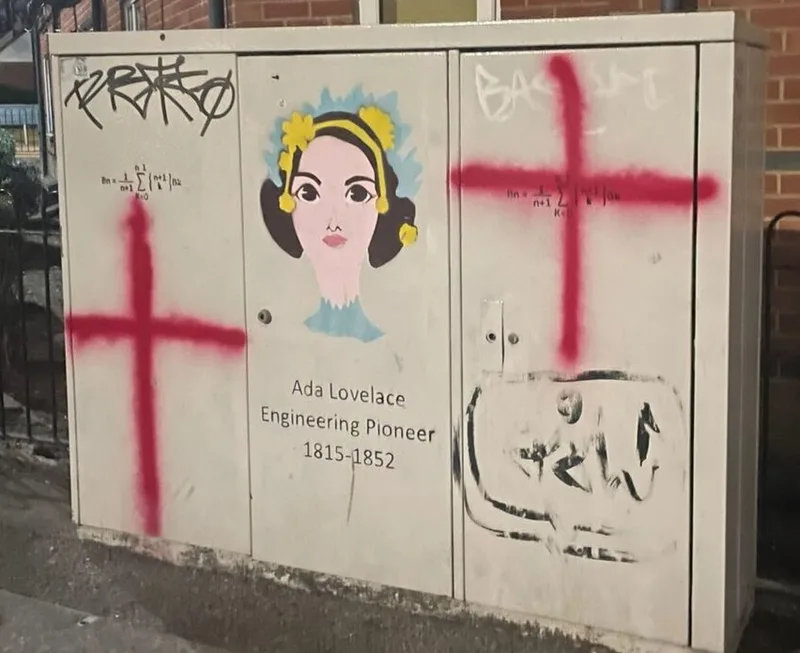
With English flags being painted on Reading's streets, support for ‘nationalism’ and the extreme right is clearly rising even as the town becomes increasingly ethnically integrated. With tens of thousands marching in the streets of London, the rise of facism and racism in the UK is impossible to ignore and is reflected in the proposed voting intentions in our town.
Reading is a wealthy town by UK standards and the ethnic tensions seen elsewhere in the country are not as apparent. It is perhaps telling that the wave of nationalist statements being made are in the poorer areas of our borough.
However there seems to be a wider discontent that may have a fundamental change on the makeup of our local council and representation at Westminster.
Voting Intentions
Based on predictions by YouGov and VoteClimate the likely outcome of a general election in Reading if held now would likely be extremely close between Labour and Reform UK, with both parties predicted to receive nearly identical shares of the vote, and the Conservatives trailing slightly behind. The Labour party would almost certainly loose overall control of the council if there was a vote in the near future (the next local election will be in May 2026 when a third of councillors will be up for re-election).
The most recent Reading-specific polling estimates for Reading Central and Reading West & Mid Berkshire forecast these approximate results:
- · Labour 25.5% down from 48.5%
- · Reform UK 25%
- · Conservative 22% down from 37.9%
- · Liberal Democrats 13% up from 9%
- · Green 8.8% up from 2.8%
These numbers indicate a highly competitive race between Labour and Reform UK for first place in both main Reading constituencies, with neither the Conservatives nor Liberal Democrats looking likely to win. This sharply contrasts with previous elections in Reading, historically a Labour-Conservative marginal.
Recent national trends also show Reform UK making significant gains at the expense of both major parties, boosting their chances in marginal urban areas like Reading. An immediate election could result in either a narrow Labour hold or a breakthrough Reform UK win, depending on turnout and tactical voting.
And it has to be pointed out that Reform UK and the Conservative parties have a significantly better record then Labour at having people from a BAME background in senior positions within the party.
Improving Ethnic Cohesion
The Labour party does seem to be taking some notice of their predicament and in November 2025 is introducting the “Closing the Gap 2” service to act as the strategic lead for local organizations supporting ethnically diverse communities. This initiative is intended to promote joint working, expand outreach, and tackle health and wellbeing inequalities through targeted community support as well as improving front line services to the poorest communities in Reading. The project includes a multi-year funding commitment, enabling outreach initiatives, preventative work, and long-term change designed to improve health outcomes and social inclusion for minority groups, which now perhaps should include marginalised white English communities in our town above all if it is to have any impact on voting intentions.

Comments
No comments yet. Be the first to share your thoughts.
Join the conversation
Log in to leave a comment on inReading.