
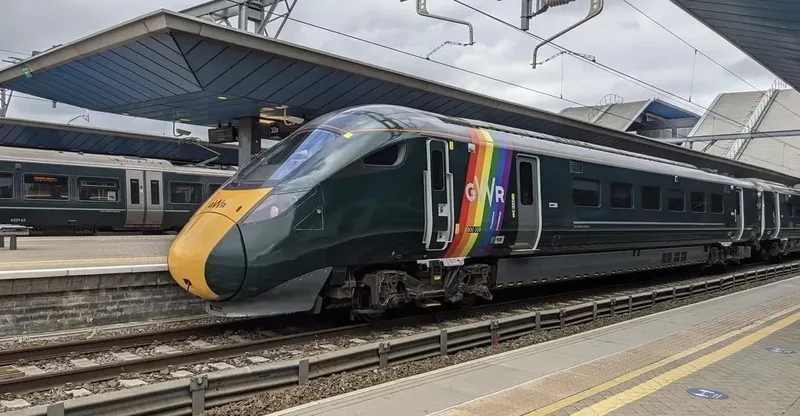
A major announcement at Labour’s party conference was the drive to privatise our railways and the announcement by the Labour party regarding Great Western Railway (GWR) has may have major repercussions for Reading. The announcement is the next major step in the journey towards renationalisation of the UK's passenger rail network.
Transport Secretary Heidi Alexander confirmed that GWR, currently operated by the private firm FirstGroup under a contract with the Department for Transport, is slated to be one of the next services to transfer into public ownership. This move, expected to take place in 2026 as part of the broader Great British Railways (GBR) plan, marks a significant reversal of three decades of free-market orthodoxy on the railways that started under John Major and represents one of the first major reversals from the ‘ago of privatisation’ that has resulted in legacies including the debacle of the water industry, high energy prices and the sale of Royal Mail to a Czech company.
Reading has the highest costs per mile in the world for commuter travel and the decision to bring GWR under public control, following similar transfers for other routes, is not an isolated incident but the culmination of a political and operational backlash against the model established by the Railways Act 1993. When British Rail was broken up and sold off in the mid-1990s under John Major’s Conservative government, the promise was one of efficiency, increased investment, and a better deal for passengers through competition. The reality, critics argue, has been a complicated, fragmented system where private profit extraction has often been prioritised over public service.
The Great Western Story
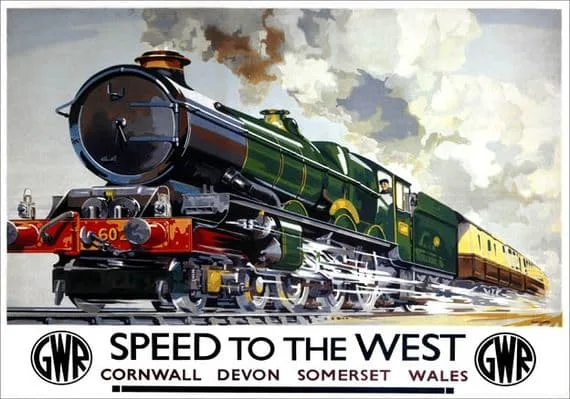
The Great Western Railway route, stretching from London Paddington westwards, carries a unique weight of history. The original GWR, famed as "God's Wonderful Railway," was a private enterprise from its founding in 1835, masterminded by the legendary engineer Isambard Kingdom Brunel. It retained its identity through the 1921 Grouping, which consolidated the multitude of small companies into four large ones, a testament to its prestige and size. Its first stint as a state-owned entity came in 1948 with the post-war nationalisation under the Labour government, becoming the Western Region of British Railways.
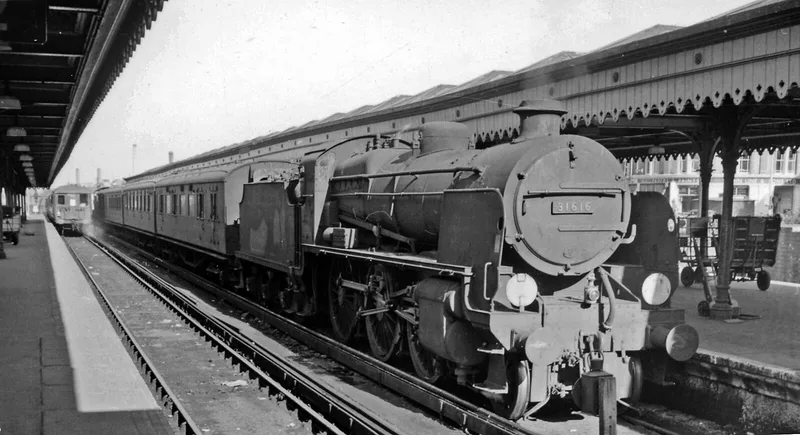
The current private iteration began when the Great Western franchise was first awarded in 1996, one of the original components of the Major government's privatisation programme. Over the subsequent decades, the franchise has changed hands, eventually resting with FirstGroup. This back-and-forth between private and public, often corresponding to shifts in political power, underscores the volatile nature of rail ownership in Britain. The present-day Labour government argues that the fragmentation of the network—where Network Rail, a public body, owns the tracks and infrastructure, while private Train Operating Companies (TOCs) run the services and Rolling Stock Companies (ROSCOs) own the trains—is fundamentally inefficient, with profits siphoned off as dividends to shareholders, which could otherwise be reinvested.
The Rationale for Renationalisation
The government's primary rationale for bringing GWR and other TOCs back under public control is to deliver a simpler, more accountable, and less expensive service.
The existing structure is notoriously complex. Bringing the services under the unified management of the new public body, Great British Railways, is intended to eliminate the frictional costs and delays caused by the need for multiple private and public bodies to coordinate, agree, and contract every decision. Anyone who has tried to buy a ticket knows that it is a minefield Proponents of public ownership point to the example of other lines, like LNER (London North Eastern Railway), which have been run under public sector operators for years following the failure of private franchisees, often showing improved performance and lower operating costs.
Another key argument is the supposed fiscal saving. The Labour government has highlighted that eliminating the need for private companies to pay out dividends to shareholders, alongside the streamlining of the complicated franchise bidding and management process, could unlock billions of pounds annually. This money, they pledge, would be used to cap fares, increase service reliability, and invest in modernisation. The financial risk is also a factor: in recent years, when private rail companies have struggled due to unforeseen events or poor management, the government has repeatedly had to step in with vast taxpayer-funded support under Emergency Measures Agreements, effectively socialising the risk while privatising the profit.
Finally, the policy is framed as a shift from 'private profit' to 'public service.' Passengers on the GWR route, which includes vital commuter, intercity, and regional services across a huge swathe of the country, have frequently complained about rising fares, variable reliability, and frustrating customer service, arguing that a profit-driven company lacks the incentive to prioritise the public good. Public ownership, the government contends, allows the railway to be run in the long-term interest of passengers and the economy, rather than the short-term interest of investors.
In 2023/24 GWR had £1,129,132,000 in revenues and £611m in operating costs. However, this does not include lease, depreciation and costs for the access to the national rail infrastructure. In reality, it is practically impossible to tell if a company is profitable or loss making at present, but the profits are calculated in favour of shareholders.
Consequences and Challenges Ahead
The move to public ownership for GWR, while politically popular with a significant portion of the electorate and various rail unions, is not without its potential pitfalls and serious challenges.
Critics of renationalisation often raise the spectre of under-investment and stagnation historically associated with the old British Rail. They argue that private companies, driven by the need to secure contracts and deliver returns, are inherently better at sourcing private capital and driving innovation in service and efficiency. While the government counters that GBR will ensure investment, the sheer scale of the funding required to upgrade the UK’s ageing railway infrastructure remains immense, and how GBR will secure this non-taxpayer funding is a question yet to be fully answered.
The creation of GBR as a unified body aims to overcome the fragmentation of the last three decades, but the challenge of managing such a vast, complex, and technologically demanding entity is significant. Previous private franchises, including GWR, have often delivered impressive infrastructure and rolling stock upgrades, such as the introduction of new intercity fleets. Ensuring that the new public model can maintain the pace of modernisation while absorbing the existing TOCs, their employees, and their varying standards of operation is a formidable organisational task. The process of integrating GWR will be particularly complex given its size and its mix of regional, commuter, and high-speed long-distance services.
The Rolling Stock Conundrum: A crucial detail of the Labour plan is that it currently excludes the nationalisation of the Rolling Stock Companies (ROSCOs), which own and lease the trains themselves. This means GBR will still have to pay leasing fees to these private entities, a considerable expense that critics, including some prominent left-wing figures and unions, argue prevents the nationalisation from being truly complete or cost-effective. They view this as a 'half-measure' that keeps a substantial portion of the rail economy in private hands, continuing a major profit extraction point.
Compensation and Cost: While the government insists the process will cost "taxpayers nothing in compensation" as GWR is brought back into public control only after its current contract expires, there may be ongoing financial obligations. The final financial impact, including the settlement of any remaining liabilities or disputes from the contract transition, will be closely scrutinised. Furthermore, the operational cost savings claimed by the government are projections, and any failure to achieve them could lead to higher subsidies from the exchequer.
The Path to Great British Railways
The transfer of GWR is a major milestone for the government's flagship rail policy, signalling its commitment to a fully publicly-owned passenger network by the end of its term. The route, which serves millions of passengers across the West of England, South Wales, and London, is often seen as a bellwether for the rest of the network.
The historical pendulum of rail ownership has swung once more. From Brunel's private venture to the post-war state monopoly, back to the fragmentation of Major's privatisation, the track is now set for a return to public service. The hope is that GBR, with the GWR route as one of its most important early additions, can deliver on the promise of a reliable, affordable, and world-class railway. The public, weary of decades of delay, high fares, and political wrangling, will be watching closely to see if the new unified model can finally deliver a train service fit for the 21st century.
The cost of rail commuting per mile varies greatly across Europe, with the UK standing out as the most expensive country for train travel. Specifically, the Reading to London route is notably costly compared to other major European countries.
Cost per Mile Comparison Table
UK (Reading-London) £0.55
Austria £0.27
Sweden £0.27
Norway £0.46
France £0.14
Germany £0.14
Italy £0.14
Spain £0.14
Eastern Europe £0.01-£0.10 - 18 countries below £0.10/mile, e.g., Poland, Belarus
Luxembourg Free
Japan £0.15
India £0.07
USA £0.28
Comments
No comments yet. Be the first to share your thoughts.
Join the conversation
Log in to leave a comment on inReading.