
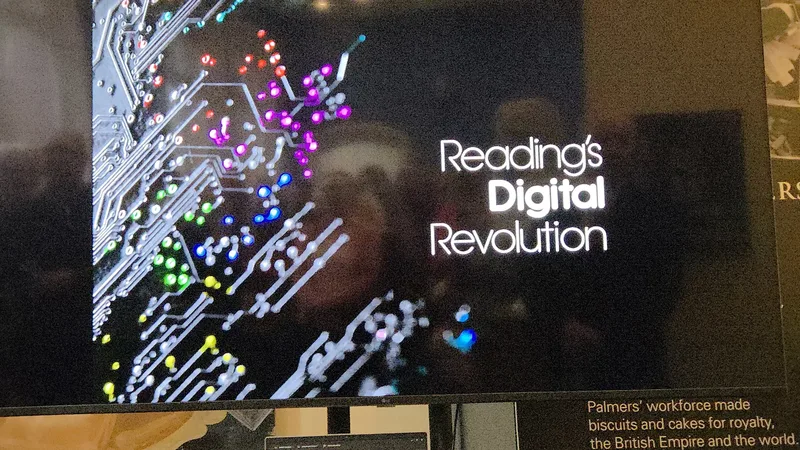
For centuries Reading was a prosperous market town known largely for making biscuits and being home to a major brewery and a seed and bulb company. It was easy to overlook, speeding through to Bristol, Cardiff or London on the Great Western - a commuter town and an administrative hub for Berkshire, a name on a departures board at Paddington, but little more. But gradually, the town became a hub for the technological transformation that has shaped our modern lives. This is the story of Digital Reading, now being told in a major new exhibition at the Town Hall.
The story begins in 1964, when a relatively unknown American company, Digital Equipment Corporation (DEC), opened a modest UK office in Reading with just two employees. At the time, DEC was still in the early stages of redefining computing for business and science. Its arrival marked a turning point. Over the next few decades, DEC would become Reading’s largest employer and, arguably, its technological heart. Its mini-computers powered labs, industries, and eventually parts of the early internet itself. (see our review below of the current exhibition celebrating DEC and other local tech pioneers).
James Governor, tech pioneer and co-founder of tech analyst firm RedMonk, called DEC’s presence in Reading “an amazing bit of tech history,” observing that the town’s contributions to modern internet protocols were, in part, thanks to DEC’s engineers quietly building the scaffolding of the digital future.
In parallel, Britain’s own technological titan, International Computers Limited (ICL), had also made roots in the region. Formed from a 1968 merger of several UK computer firms, ICL represented a distinctly British push toward technological self-sufficiency based at Reading Bridge House overlooking the Thames. While Reading was not ICL’s only base, it became one of several key nodes in a network that sought to rival American dominance in computing.
Together, DEC and ICL turned Reading into a crucible of computing talent. More than just job creators, they seeded a culture of technical sophistication that would outlast even their own corporate legacies. Tech talent gravitated to the town and formed the nucleus of what continues to be a major tech hub to this day.
The M4 Corridor and Global Expansion at TVP
By the 1990s, the M4 motorway connecting London to South Wales had become a corridor where telecoms, IT, and software firms clustered. Reading sat squarely in the middle of it. Thames Valley Park became a focus for global tech companies.
Before the mid-20th century industrial development, the land where Thames Valley Park and its predecessor, the Earley Power Station, now sit was primarily agricultural land and water meadows, this radically changed around the start of the Second World War with the construction of the Earley Power Station, which became fully operational mainly in the post-war years from the late 1940s. Operated by the Central Electricity Generating Board (CEGB), this large coal-fired power station continued operations until 1976, when it was decommissioned as newer, more efficient facilities came online and environmental awareness grew.
Following the power station's closure, the site remained largely derelict for several years, until in the late 1980s, amidst the economic growth of the M4 corridor, the development company Speyhawk acquired the land. They envisioned transforming the former industrial site into a modern, high-specification business park, capitalising on the attractive riverside setting. This vision involved not only constructing office buildings but also extensive environmental remediation, landscaping, the creation of lakes, and establishing a nature reserve on adjacent land. Construction commenced in the late 1980s and extended into the early 1990s.
Thames Valley Park opened its first buildings in the early 1990s and quickly established itself as a premier business location. Major international companies were attracted to the park, with Oracle Corporation establishing a significant presence early on, alongside other notable tenants like Microsoft and OpenText.
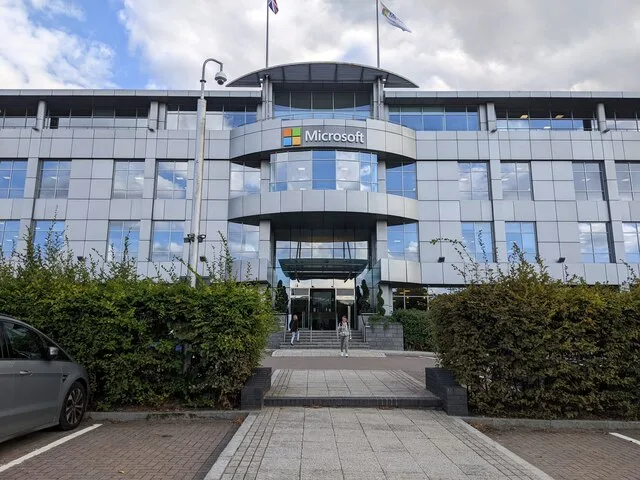
Microsoft started up in Windsor before moving to a modest office on Vastern Road, from where they shipped early copies of Microsoft Word and other software packages, rapidly expanded and set up a major UK campus in Thames Valley Park.
3Com moved into the Winnersh Triangle. Cisco, Symantec, Ericsson, and Huawei all established major operations. Their reasons were clear: proximity to London, a pipeline of graduates from Reading and Oxford universities, and a business ecosystem honed by decades of innovation. And a quick cab ride to Heathrow and flights to the largely US headquarters of these companies also helped.
This wasn't just a US phenomenon. Canadian company OpenText, which had emerged from a university project to digitize the Oxford English Dictionary, opened a UK headquarters in Reading as it expanded globally. Originally launched in 1991, OpenText had been an early player in enterprise information management and even licensed its search engine to Yahoo in the 1990s. Its choice of Reading for European operations reflected the town’s growing role as a magnet for international digital talent.
Later, the controversial Chinese tech company Huawei opened its European headquarters in Reading before being stymied for its links with the Chinese military, resulting in the loss of major government and national telecom contracts in the UK and US.
Reading’s tech story isn’t just about multinationals. The region has quietly nurtured a vibrant startup culture. Altitude Angel, a Reading-based company, is at the forefront of autonomous drone traffic management—developing real-time flight control systems that could one day power a global aerial infrastructure. KYMIRA, another local success, designs wearable technologies used by Olympic athletes and space agencies alike. Newer firms like TrustID are pioneering identity verification solutions, while CrowdForce, despite recent controversies, has established a major base in the town.
The Downside
In reality, in recent times, Reading has been a sales and marketing base, not a hub of innovation. It has been the offshore centre for many of the world’s largest tech companies, but has failed to find and nurture much home grown talent or breakaway organisations.
There are a number of reasons for this, including the fact that the University has no school of computing and few courses directly attached to the computing industry and there is a dearth of start up capital in the region - with its research, innovation and access to capital, startups tend to prefer Oxford, or head for London.
Up until recently there has also been scant incentive for entrepreneurs to set up ventures in or near the town – the talent they need are elsewhere and the office space is expensive.The tech sector in Reading may remain dense - seven times the national average, according to a 2017 Tech Nation report, and that same year, the local tech economy generated over £13.6 billion in turnover. However, the town has in recent years failed to attract the big names. The startups of the internet era preferred the bright lights of the big city – the likes of Google and Meta are firmly headquartered in London and the current wave of AI companies barely need a physical presence anywhere.
Tech Reading may well be an era coming to an end, as did the biscuit making, bulb growing and beer brewing industries that predated it.
Reading Digital Revolution Exhibition
Current mobile phones contain more computing power than the many banks of computers that got man on the moon and we hold in our hands what once took a whole warehouse of storage space.
Computers now are very different to those giant machines now glimpsed in re-runs of old films and television programmes, such as the one that Professor Peach interfered with to stop the Milan traffic in The Italian Job. Powered by magnetic tapes on reels bigger than a dinner plate and a lot heavier than a dinner plate laden with goodies from a Toby Carvery buffet, it is a far cry from the storage and processing power that we take for granted in the ‘cloud’.
And Reading had its role to play in this digital revolution. In reality, we should be known for the four Bs: Beer, Bulbs, Biscuits and Bytes.
A new exhibition, running in the Sir John Madejski gallery of Reading Museum until Christmas Eve and part-funded by a grant from the National Lottery Heritage Fund, showcases the work carried out across the ages with a particular focus on the story of Digital Equipment Corporation (DEC).
In 1964, the company opened its first UK office in 11 Castle Street. Now home to the Brewdog pub, it was designed by JJ Cooper and built in 1837. Used as a Congregational Chapel, it was converted into retail space in 1956, and a pub or nightclub in the late 1990s. It is also a Grade II listed building. https://historicengland.org.uk/listing/the-list/list-entry/1113411
From this early start, with just two employees, the company grew and grew: employing more than 2,000 people at its peak. This set the scene for Reading’s role as a main player in the way in which computing changed over the decades and will continue to change.
The town and surrounding area are now home to many firms including Microsoft, Oracle and Cisco, among others, while telephony firms such as Three and Virgin Media also have headquarters based here.
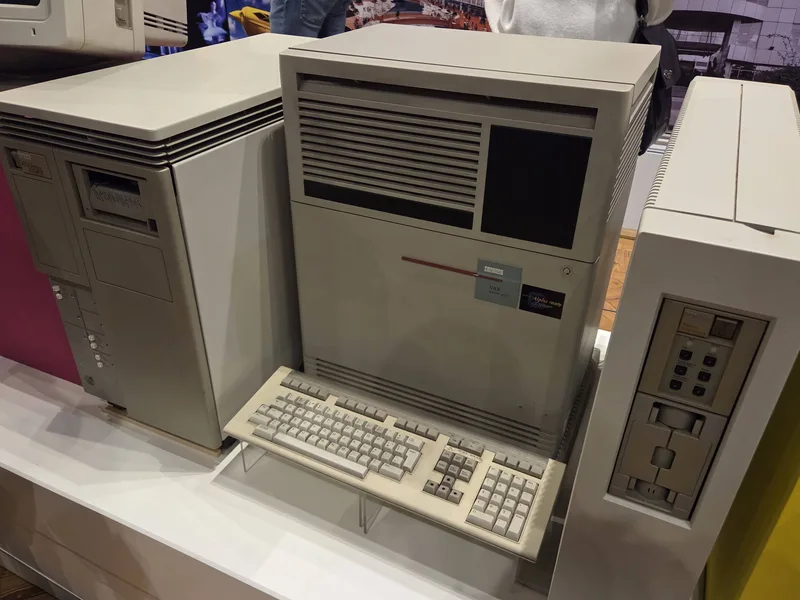
The Reading Museum exhibition is a unique chance to take stock, celebrate, and look back at the journey the computer has been on thanks to a display of rare and vintage computing equipment on loan from Bletchley Park’s National Museum of Computing and private collectors.
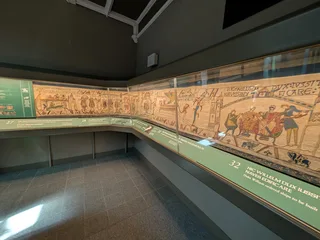
Set out across the gallery space, there are wall panels telling the story of Reading’s role in sharing information from the days of the monks right up to the present day, with a focus on the past 60 years.
A special pictorial display, featuring images from the archives of publications such as the Reading Evening Post, shows what everyday life was like in the town when DEC first opened up its offices.
There are two video installations, one offering reflections on the growth of Reading’s ICT industry from key figures who worked here. A second is nestled in a large mural of a futuristic Reading, and has been created by Jelly artist Jessica Brauner.
In the middle of the room are the vintage computers, some the size of towers, some much more user friendly. Some of the machines will have been found in people’s homes, others in workplaces. Each will have someone exclaiming, “I remember that!”
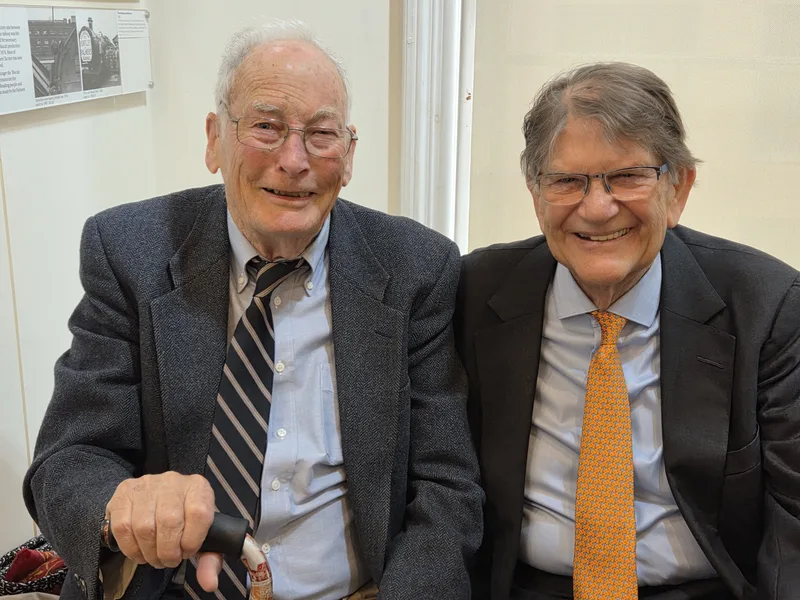
The exhibition was opened on Monday, March 17 by John Leng, who came from the United States to launch DEC UK all those years ago.
He joined DC in 1963 as engineering manager and was promoted, in 1966, to European Regional Manager with responsibility for Digital's efforts throughout Europe. As vice president of the large computer group, he was responsible for the engineering, marketing and manufacturing aspects of some of the earliest DEC machines, and coined the term minicomputer; this highlighted the differences between what firms such as IBM were creating with large mainframe machines to the smaller desktop computers that found their way into businesses, schools and homes from the late 1970s onwards.
He coined the phrases in a contemporary sales report he wrote: “Here is the latest minicomputer activity in the land of miniskirts as I drive around in my Mini Minor”. It captured attention within DEC and rapidly spread its way around the world.
For the launch of the Digital REVOLUTION exhibition at Reading Museum, John returned to the UK to be present for this trip down a digital memory lane. Naturally, having been several decades since he had been in the town, he observed that much had changed.
“I’m very proud to be here,” he said. “But it’s almost being on a different planet as Reading is so different. It looks so prosperous and go-ahead. It’s really wonderful to see.
“I don’t know how much - how big a way, how small way - DEC affected the look of the town and the future of the town.”
His speech at the grand opening for the exhibition was an opportunity for him to share some reflections with those present, revealing he had been coached by some of the leaders in the computing business including one of the very first programming computers developed in the world.
“In those days, we had a tripartite agreement between the US, Canada and the UK,” he said. “We had joint projects, and staff could move interchangeably between the various institutions and countries.”
This meant John spent some time in Canada and this resulted in his early work on digital computers.
“I was lucky enough to become one of the early customers for a PDP (one of Digital’s first computers),” he said. “We could do real time data collection, as well as computing in real time.”
That might seem like a strange sentence today, as computing is fairly instantaneous, but back then you could feed data into the machines and come back several hours later to see if it had been computed.
John was the key driver in bringing DEC to the UK, and had originally considered setting up in a different location altogether.
“I was living in Bracknell at the time, trying to set up there, but Bracknell was a new town and designed for new companies to set up. I moved down the road to Reading and this was a very receptive place and became a sweet spot.
“We did very well here, it was a wonderful thing and this operation became the largest for DEC in Europe.”
The exhibition, he said: “Has an important story to tell and I think it will be an inspiration for us to do their bit and start something new.”
Among those present at the opening was Sir John Madejski. “It’s a marvellous exhibition with so much to see,” he said. “One doesn’t realise the depth of knowledge that is in here. It’s incredible that it has all taken place around Reading since 1964.
“It is all encapsulated here - the history of IT and how it started off from an office in Castle Street to employing thousands of people throughout the area.
“I’m sure a lot of people in Reading won’t have realised this is here, but I hope they spread the word so people come and see it.”
John Leng wasn’t one to rest on his laurels: he is still looking to the future, even though he is now in his 90s.
“Some of the best work being done in the UK is in quantum computing. You may not have heard much about it, but it’s going to change our lives again. “It is going to be a new era of computing.”
See the Reading Digital Revolution Exhibition
The Reading Digital Revolution exhibition is on show at Reading Museum in Blagrave Street until Christmas Eve, Wednesday, December 24.
Entry to Reading Museum is free, although a suggested donation of £5 per visitor is welcomed.
It is open from Tuesday to Friday from 10am to 4pm and 10am to 5pm on Saturdays. It is closed on Sundays, Mondays, and Bank Holidays. Groups of 10 or more are asked to book in advance.
There are special events related to the exhibition across the year, and Tech Town Walk will be held from the Museum on Wednesday, May 14, between 10am and noon.
For more details, log on to https://www.readingmuseum.org.uk/ or call 0118 937 3400.

Comments
No comments yet. Be the first to share your thoughts.
Join the conversation
Log in to leave a comment on inReading.