

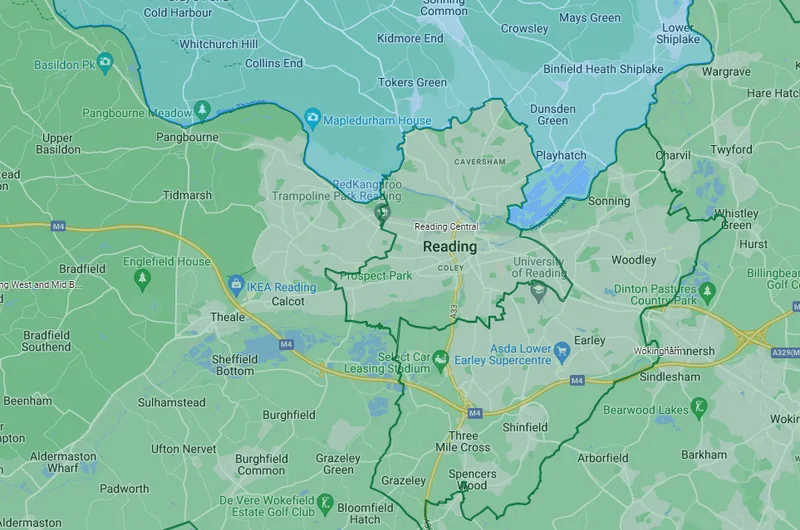
With a General Election looming, there have been significant changes to the political map in and around Reading.
Reading and the wider Berkshire area are set to enter a new era of electoral representation with the implementation of revised parliamentary constituency boundaries. These changes, finalised in October 2023 by the Boundary Commission for England, aim to ensure equal representation for voters and will come into effect for the next general election now confirmed for 4th July.
Reading's Historical Boundaries
Before 1885, Reading formed part of the Berkshire parliamentary constituency - between 1430 and 1832 the ability to vote was defined by the Forty Shilling Freeholder Act, which gave the right to vote to every man who possessed freehold property within the county valued at £2 or more per year for the purpose of land tax. In 1832 Berkshire had a population of around 145,000, but only 3,726 votes were cast at the election of 1818 even though each voter – who did not need to be resident in the county - could cast two votes.
The Great Reform Act of 1832 was a landmark legislation that transformed the British electoral system and expanded the political representation of the middle class. It was passed by the Whig government led by Earl Grey, who faced fierce opposition from the Tories and the House of Lords. The Act aimed to address the problems of the existing system, such as the unequal distribution of seats, the corruption of rotten boroughs, and the exclusion of large industrial towns, that had sprung up during the industrial revolution, from Parliament.
The Act abolished 56 boroughs that had very few voters and were often controlled by wealthy patrons. It also reduced the number of MPs for another 31 boroughs. It created 67 new constituencies, mostly in the growing cities of the Industrial Revolution, such as Manchester, Birmingham, and Leeds. It also broadened the franchise by lowering and standardising the property qualification for voting in the counties and the boroughs. The Act gave the vote to about 650,000 men, or one in five of the adult male population. However, it still excluded the majority of the working class, as well as all women, from the franchise.
The Great Reform Act was a significant step towards democracy in Britain, as it broke the monopoly of the landed aristocracy and the old corporations on political power. It also stimulated further demands for reform, both from the radical movements and the moderate liberals, who sought to extend the franchise, introduce the secret ballot, and abolish the property qualification for MPs. The Act was followed by two more Reform Acts in 1867 and 1884, which gradually expanded the electorate to include most of the adult male population, and eventually, in 1918, women over the age of 30.
Further constituency changes came with the Reform Act of 1884 which created a single-member Reading constituency. This remained until 1950.
In 1950, the growing town was divided into two constituencies: Reading North and Reading South. This remained the configuration until 1983, when further population growth necessitated another redrawing of boundaries. Reading North and Reading South were replaced by Reading East and Reading West.
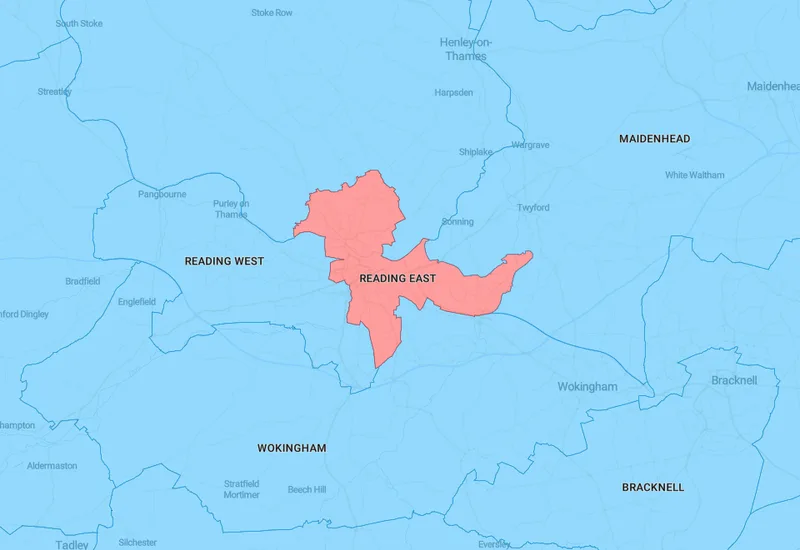
With a General Election looming, there have been significant changes to the political map in and around Reading.
Reading and the wider Berkshire area are set to enter a new era of electoral representation with the implementation of revised parliamentary constituency boundaries. These changes, finalised in October 2023 by the Boundary Commission for England, aim to ensure equal representation for voters and will come into effect for the next general election, likely to happen this year now confirmed for 4th July.
Reading's Historical Boundaries
Before 1885, Reading formed part of the Berkshire parliamentary constituency - between 1430 and 1832 the ability to vote was defined by the Forty Shilling Freeholder Act, which gave the right to vote to every man who possessed freehold property within the county valued at £2 or more per year for the purpose of land tax. In 1832 Berkshire had a population of around 145,000, but only 3,726 votes were cast at the election of 1818 even though each voter – who did not need to be resident in the county - could cast two votes.
The Great Reform Act of 1832 was a landmark legislation that transformed the British electoral system and expanded the political representation of the middle class. It was passed by the Whig government led by Earl Grey, who faced fierce opposition from the Tories and the House of Lords. The Act aimed to address the problems of the existing system, such as the unequal distribution of seats, the corruption of rotten boroughs, and the exclusion of large industrial towns, that had sprung up during the industrial revolution, from Parliament.
The Act abolished 56 boroughs that had very few voters and were often controlled by wealthy patrons. It also reduced the number of MPs for another 31 boroughs. It created 67 new constituencies, mostly in the growing cities of the Industrial Revolution, such as Manchester, Birmingham, and Leeds. It also broadened the franchise by lowering and standardising the property qualification for voting in the counties and the boroughs. The Act gave the vote to about 650,000 men, or one in five of the adult male population. However, it still excluded the majority of the working class, as well as all women, from the franchise.
The Great Reform Act was a significant step towards democracy in Britain, as it broke the monopoly of the landed aristocracy and the old corporations on political power. It also stimulated further demands for reform, both from the radical movements and the moderate liberals, who sought to extend the franchise, introduce the secret ballot, and abolish the property qualification for MPs. The Act was followed by two more Reform Acts in 1867 and 1884, which gradually expanded the electorate to include most of the adult male population, and eventually, in 1918, women over the age of 30.
Further constituency changes came with the Reform Act of 1884 which created a single-member Reading constituency. This remained until 1950.
In 1950, the growing town was divided into two constituencies: Reading North and Reading South. This remained the configuration until 1983, when further population growth necessitated another redrawing of boundaries. Reading North and Reading South were replaced by Reading East and Reading West.
The 2023 Revamp
The latest reforms introduce a significant change, expanding Reading from two to three constituencies: Reading, Earley & Woodley, and West Reading & Mid.Berkshire.
Wider Berkshire Changes
The boundary changes extend beyond Reading, affecting several other Berkshire constituencies. Notably, Bracknell is now merged with Wokingham to form Bracknell Forest, while Newbury is expanded to include Thatcham and parts of Pangbourne.
Additionally, new names have been assigned to some constituencies, such as Windsor becoming "Windsor, Ascot & Sunningdale." Check the interactive maps and gallery to see how changes are likely to affect you.

Comments
No comments yet. Be the first to share your thoughts.
Join the conversation
Log in to leave a comment on inReading.