
The Metropolitan Railway was the first underground railway line to open in London in 1863. It originally ran between Paddington and Farringdon stations. The line was gradually extended, out into the wide open fields of what was then Middlesex, many miles from central London. Enterprising landowners built homes near Metropolitan stations and marketed them as "Metro-land" - suburban communities for middle class city workers who could now easily commute. One housebuilder even put up show homes outside Kings Cross station to promote their suburban properties to the north west.
The opening of the Elizabeth Line seems to have promoted the 21st century’s equivalent, but this time within the urban confines of Reading, the New Metroland.
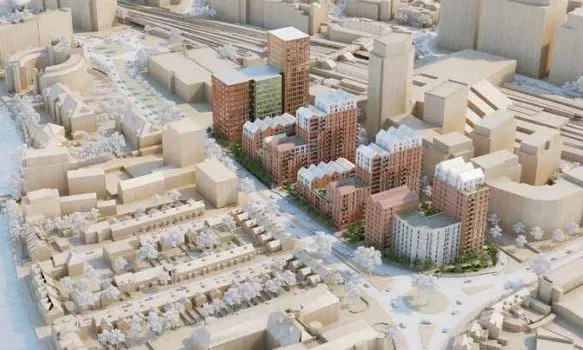
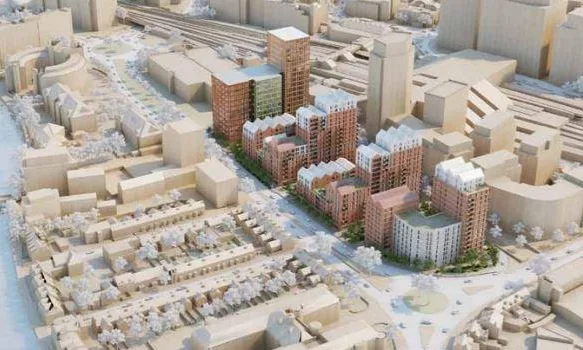
A number of large developments are already nearing completion – nearly 800 units at Huntley Wharf, a further 1,300 in Station Hill (presuming it doesn't burn down first).
The old Post Office site, SSE building and the Vastern Road retail park are all in various stages of planning and the Forbury Retail Park as well as the adjacent site on the other side of the railway track seem to be next in line.
Even parts of The Oracle are earmarked for development by the addition of residential blocks.
Now fourteen further sites have been earmarked as part of the Local Plan.
inReading has put together a comprehensive plan of all the current proposed developments (see map below).
Plus there is the post pandemic conversion of redundant offices to housing under Permitted Development legislation that resulted in a recent spat between the Housing Secretary and Reading Borough Council. Inevitably Michael Gove and central government won and many areas of Reading can have offices converted with little or no oversight beyond building regs.
Much of central Reading's population are mobile and transient, working for multinationals or in IT in roles that can see them quickly reassigned. With private landlords finding it ever more difficult to make profits and adhere to regulations, developers have stepped in with built to rent properties such as Thames Quarters on the old BMW garage site by the station.
In a recent discussion with a leading local estate agent, I questioned whether there was demand for development on this scale. His view was that demand for rental in the town was practically limitless, and you can bet your pension that the companies behind these developments would not be investing unless they had a market and could see a healthy return.
The Strategic Housing Market Assessment for Reading was written in 2016 and identifies the need for 699 new residential dwellings per year. The Local Plan was initially adopted in 2019 and is still in development, detailing plans for the development of our town up to 2036. Again, we delve into this in more detail below.
So it looks like the centre of Reading will be a major building site for the foreseeable future and that we are likely to welcome 20-30,000 more residents in 10,000 new units over the coming decade.
But perhaps a more important question for the Local Plan is where are the facilities and infrastructure to support this development. Many buses run so full at peak hours that kids can't get to school on time, if reports are to be believed. Facilities such as schools and doctors’ surgeries are increasingly oversubscribed and one has to wonder whether the current sewage and water infrastructures will be able to cope. There is some provision within the local plan, but what happened when Arborfield Garisson became the massive new development of Arborfield Green, where thousands of homes have been built with little provision for any facilities such as a shop, is a warning of what can happen in reality.
And what about affordable housing? Developers are increasingly finding ways of wheedling their way out of their responsibility to make 10% of commercial housing developments 'affordable'. Through a combination of funding cuts and restrictions on use of capital imposed by central government, local authorities have been unable to invest in social housing, a role that was meant to be taken up by Housing Associations. This has resulted in an imperfect solution, where affordable housing has replaced social housing. Huntley Wharf was an unusual development for Reading in that it was co-developed by a housing association and had good affordable homes provision as a result. However, few of the developments detailed below reflect this - where details are available, information for affordable units have been provided.
Just as with the old Metro-land, the new Metroland in Reading seems to appeal to those able to afford it.


Comments
No comments yet. Be the first to share your thoughts.
Join the conversation
Log in to leave a comment on inReading.