
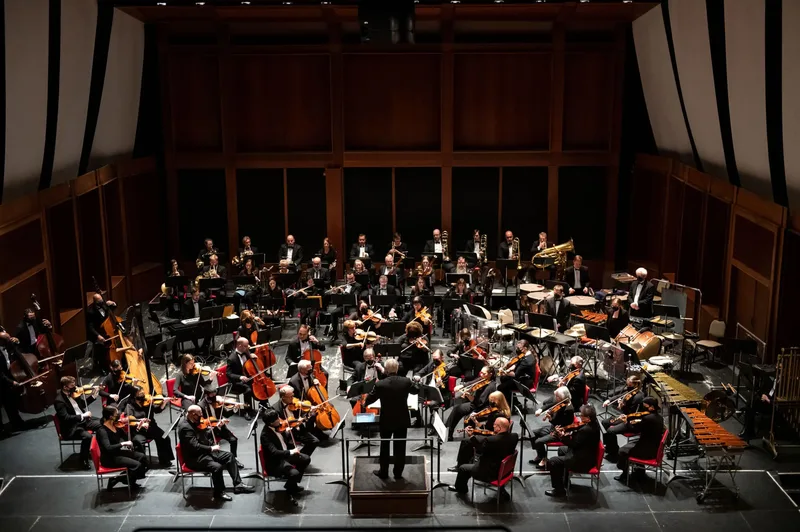
Reading may be best known today as a hub for commerce, technology, and its world-famous rock festival, but behind the electric guitars and festival fields lies a quieter, enduring tradition: classical music. The town has cultivated a surprisingly rich and varied scene that reaches from historic churches and concert halls to modern performance spaces and community initiatives.
From popular performances at St Mary’s Minster to more traditional concerts at Reading’s magnificent but less known concert halls, we take a look at Classical Reading this month.
The heart of Reading’s classical music life is the historic Concert Hall, tucked away above the town’s Victorian Town Hall. Built in 1882 and praised for its superb acoustics, the hall has welcomed celebrated orchestras, chamber ensembles, and soloists from around the world. Pianists in particular have long cherished its intimate scale, and to this day the venue continues to attract leading names alongside emerging talent. The nearby Hexagon, Reading’s larger theatre and concert hall, complements this with full orchestral performances, touring opera, and ballet companies, bringing a cosmopolitan dimension to the town’s cultural calendar.
Local ensembles also give Reading’s classical scene a distinctly community-driven flavour. The Reading Symphony Orchestra, one of the UK’s oldest amateur orchestras, has been performing since 1939 and regularly collaborates with professional soloists. The Berkshire Philharmonic and smaller groups such as the Aldworth Philharmonic, known for its innovative programming and informal style, highlight the breadth of opportunity for musicians and audiences alike. Choral traditions are equally strong. Reading Bach Choir, established in the 1960s, continues to stage ambitious works ranging from Baroque masterpieces to contemporary compositions, while church choirs and chamber groups sustain a rich vocal culture across the town.
Education has played a crucial role in embedding classical music within Reading’s identity. The University of Reading’s music department may have closed in the 1990s, but the town’s schools, private teachers, and music hubs still ensure a pipeline of young talent. The Berkshire Maestros music service has trained countless students in orchestral playing, feeding into youth ensembles across the South of England and London, and fostering a love of performance from an early age. Masterclasses, community workshops, and outreach projects also help bridge the gap between professional music-making and local audiences.
Classical music in Reading is not limited to the concert stage. The town’s churches—particularly St Laurence’s and Reading Minster—often resound with organ recitals, chamber concerts, and seasonal choral performances. Festivals, too, add vibrancy. While the Reading Festival is synonymous with rock, events like the Reading Fringe and local chamber music series carve out space for more traditional sounds, offering intimate encounters with string quartets, early music specialists, and contemporary classical composers.
What stands out is the balance between tradition and reinvention. Audiences can sit beneath the ornate Victorian arches of the Concert Hall for a Brahms symphony one evening, and the next, discover a contemporary ensemble reimagining classical works with multimedia elements. Reading’s musicians have managed to preserve the grandeur of the classical canon while also experimenting with new ways to engage listeners.
Upcoming Concerts
A rarely heard piece of classical music is to be performed in Reading later this month, as talented musicians come together for an autumn concert.
Since its founding, the Aldworth Philharmonic Orchestra – known affectionately as the APO – has been on a mission to demystify classical music concerts, while also performing to the highest possible standards.
It aims to be a vibrant amateur ensemble based in Reading, with an inclusive spirit, and creative programming, selecting pieces from across the centuries, seeking out lesser-known works, and giving world premieres of pieces it has commissioned from new composers.
For performers, it’s a dream too: rather than having to commit to weekly rehearsals throughout the year to hone their music, APO members come together on weekends before a concert. This ‘crammed in’ approach makes it easier for people who may have shift patterns, childcare commitments, or just can’t miss the latest episode of Corrie.
The APO’s autumn concert will be based around Mahler’s Ninth Symphony, a piece that is rarely performed. It explores themes of mortality and acceptance and is widely considered to be Mahler’s farewell work.
Andrew Taylor is APO’s Music Director – and is usually found wielding the baton as its conductor. He sees the Symphony as an emotional experience.
“Mahler’s four-year-old daughter had died just two years before he composed it, and he had recently been diagnosed with a heart condition. But it’s not a work of morbid introspection – it’s full of colour, contrast, and emotional range.
“From lilting folk tunes to heroic struggle, biting satire, and an ending so tender it never fails to move me to tears.”
Melanie Hopkin, APO’s Patrons and Outreach Manager – and principal cellist – said that a Mahler symphony is always an event that demands vast orchestral forces and places intense physical and emotional demands on the players.
“It’s rare for an amateur orchestra to take on something so all-encompassing, and we can’t wait to begin rehearsals and share this extraordinary music with our audience,” she continued.
The performance takes place at the University of Reading’s Great Hall in the London Road campus, on Saturday, 25 October from 7.30pm.
Tickets cost £15 for adults, £10 for under 18s, and £7 for members of its APO Young fan club. This is free to join and is for youngsters aged between five and 15. It also offers free entry for those who have never been to a classical musical concert before.
For more details or to reserve tickets, log on to: https://www.apo.org.uk/next-event/
Free entry for Concert Virgins: people who have never attended a classical music concert before
The APO is very keen to dispel myths about classical music, such as it is only for posh people or older folk, or people need to know a lot about the genre to appreciate it.
Essentially, anyone who has never attended a concert before will be able to turn up and enjoy the music. They need to inform the box office they have never attended a classical music concert before and afterwards complete a brief survey about their experience.
Full details for the scheme are set out on the APO’s website https://www.aldworthphilharmonic.org.uk/apo-concert-virgin-scheme/
The APO Young’s role in helping children understand more about classical music
The APO is for children aged five to 15, and has been running since 2018. The idea of James, the son of APO Music Director Andrew, the scheme helps children get a better understanding of orchestras, the music they perform and the role that instruments can have in making the sound come together.
It’s free to join, and members receive a badge, newsletters, invitations to special rehearsal events… and discounted tickets.
The APO’s website https://www.aldworthphilharmonic.org.uk/apo-young/ has a comment from James about the club, who said: “APO has always welcomed children to its concerts and has held various special educational events over the years, but having a special fan club means we can put on more regular events to encourage children to enjoy orchestral music.”
This isn’t the only classical music you can attend in Reading this autumn.
West Forest Sinfonia
The West Forest Sinfonia is another Reading-based orchestra that performs regularly in The Great Hall, and they will return on Sunday, 5 October, at the early time of 4.30pm.
Conducted by Philip Ellis and led by Giles Wade, their programme will include a selection of Khachaturian Spartacus Suites, Kabalevsky’s Cello Concerto no. 2, and Prokofiev’sSymphony no. 6.
They will be joined by cellist Rachel Siu as the guest soloist.
Tickets cost £18, or £5 for students or under 18s. They can be purchased on the door, by calling 07977 050265, or by sending an email to: [email protected]
Jeneba Kanneh-Mason at Reading Concert Hall
Jeneba made her debut at the BBC Proms last year, performed at the BAFTAs and the Royal Variety Performance, and been hailed as a rising star by Classic FM.
Now she is coming to Reading’s Concert Hall for an evening of music on Tuesday, 14 October.
A pre-concert talk takes place from 6.30pm, while the performance itself starts at 7.30pm. The programme includesworks by Chopin, Debussy and Florence Price that are featured on her debut album Fantasie, which was released earlier this year, as well as J.S. Bach’s Partita No. 5, and Beethoven’s Sonata No. 17, The Tempest.
Tickets cost £14, £19 or £22, with under 18s and students £6. Anyone new to Reading Arts’ Classical Music Alive strand can enjoy the performance for £12.
For more details, call the box office on 0118 960 6060, or log on to: https://whatsonreading.com/ClassicalMusicAlive/jeneba-kanneh-mason-piano
Concerts In Caversham autumn festival
Running since 2011, the Concerts in Caversham series sees some of the very best musicians from across the country perform.
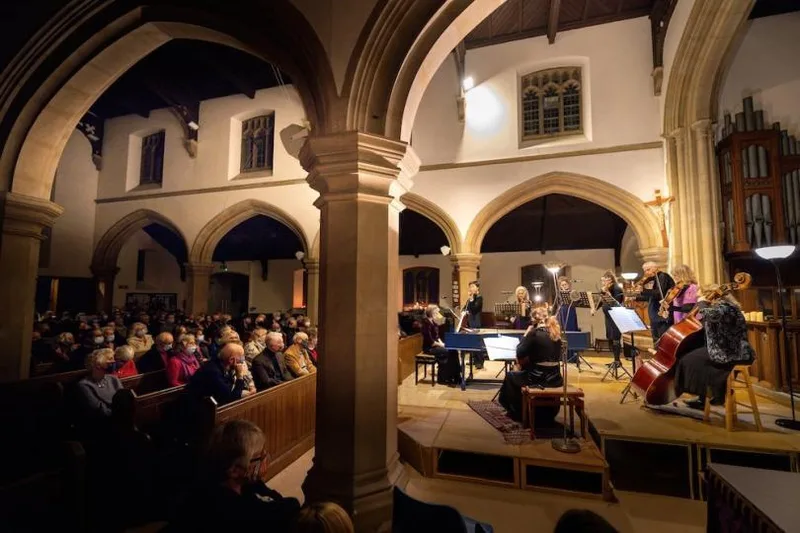
Its Autumn Festival of Music and Art will take place at St Andrew’s Church in Albert Road, Caversham.
The first event is on Friday, 24 October, and sees the Concerts in Caversham Ensemble perform Haydn’s cheerful Gypsy Rondo Piano trio, Dohnanyi’s Serenade, a Haydn string trio and Brahms’ grand piano quartet in G minor.
The Pelléas Ensemble visit on Saturday, 25 October, with a programme including Debussy’s sonata for flute, viola and harp.
Then on Friday, 31 October, bass baritone Alex Jones will be accompanied by pianist Adrienne Black for Carmen To Caberet and Everything In Between. Expect famous operatic arias by Rossini, Mozart, Bizet (Carmen) and Offenbach interspersed with songs by Ravel and Roger Quilter … and some Flanders and Swan for good measure.
The final event will be on Saturday, 1 November, and sees the Ferrio Saxophone Quartet team up with Adrienne Black forworks by Gerschwin, Glass, Kurt Weil and Shostakovich.
For more details, or to book, log on to: https://www.concertsincaversham.co.uk/concerts
Regular organ concerts at Reading Town Hall
The first Monday of the month will see Berkshire Organists Association present a lunchtime performance on the famous Father Willis Organ in Reading Town Hall.
The short show lasts around 45 minutes and sees a guest musician perform.
On Monday, 3 November, the show will see flute and organ dup Inversion pay a visit, with a programme that includes music by Bach, Widor and Saint-Saëns, plus Fantasias on two hymn tunes.
Tickets cost £5 in advance or £6 on the door.
For more details, call the box office on 0118 960 6060, or log on to: https://whatsonreading.com/lunchtime-organ-recital-november-2025
Reading Bach Choir’s Remembrance concert
On Saturday, 8 November, Reading Bach Choir will present Made Holy By Their Dreams, an evening of music perfect for Remembrance weekend.
The programme includes Gerald Finzi's moving Requiem da Camera, and Bach's motet Komm, Jesu, komm.
The choir is accompanied by Nicholas Shaw and conducted by Daniel Mahoney.
Tickets cost £18 in advance or £20 on the door, and under 18s are £5.
For more details, log on to: www.readingbachchoir.org.uk
Reading Symphony Orchestra
Reading Symphony Orchestra return to the Concert Hall for their Autumn Concert, and will welcome soprano Nadine Benjamin to join them. Said to be a charismatic and versatile artist, she is in increasing demand on both the operatic stage and the concert platform.
For this concert, the music includes Bach and Elgar’s Fantasia and Fugue in C Minor, and Strauss’ For Last Songs.
Tickets cost £18, and £6 for those in education.
For more details, call the box office on 0118 960 6060, or log on to: https://whatsonreading.com/venues/town-hall/whats-on/reading-symphony-orchestra-autumn-concert

Comments
No comments yet. Be the first to share your thoughts.
Join the conversation
Log in to leave a comment on inReading.