
Reading has been a boom town for a long time, but there is a cold wind blowing in on these warm summer nights that threatens an end to this period of prosperity.
If you live in Reading, you cannot have failed to notice that many offices in town have remained empty for years. Swathes of the Forbury development on the old Metalbox site have never been let. Many other offices in town have fallen to the same post COVID fate thanks to WFH and many are being converted to flats under permitted development. The M&G building on the site of the former Huntley & Palmer HQ is already being partially converted despite being clearly unsuitable in its current configuration. And this may be the first indicator of the changes we are about to face as Reading faces a tougher economic time ahead thanks to a combination of factors.
Economists talk about macro effects - Trumps tariffs and the national insurance increases along with the advent of AI mean that hirings for graduates is down a shocking 60% in the UK.
And 'quiet' redundancies have been happening in the town for some time. Microsoft, who once upon a time employed thousands at their Thames Valley Park campus now barely have any employees left at the site, retaining just one building. Other Reading based tech companies such as Cisco and Oracle have also been slowly and quietly shedding jobs.
Companies and local politicians loudly trumpet the creation of new jobs, but are somewhat more reticent to disclose when things are going in the opposite direction, so, along with a lag in the publication of official statistics of up to two years, the real trend is difficult to track.
So, news that Yell, based on Forbury Road in Reading, are about to make significant redundancies is unusual and may be a bellwether. On this week's layoffs announcement, an employee commented: "The morale is really bad at the minute. It's expected that around 120 people are to be let go." Of course, Yell is a publishing business that has suffered from the growth of rivals such as Checkatrade and NextDoor, as well as seeing increases in the cost of marketing through Google and Meta, so this may be an outlier. But at inReading we think not.
There were also reports surfacing this week that major local IT employers TCS and Wipro, based on Kings Road, are cutting back their global workforce in the face of uncertainty and increased use of AI and automation to deliver software projects.
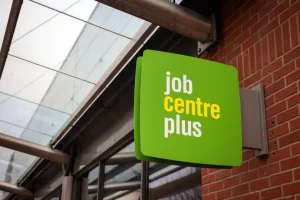
Job vacancies in the area have fallen significantly and unemployment has crept up, albeit from a very low 3.3% to 3.5% in December 2023. Vacancies on job boards have fallen precipitously over the past five years from 10,000 positions to just under 1,500 this month.
Even Reading University has opened a targeted Voluntary Severance Scheme. English language, English literature, Maths, Statistics, Biomedical engineering, Environment, Art, Construction Management and Engineering are all targeted.
And it is the effect on graduates that is perhaps most concerning. Beyond the macro effects of global politics, tariffs and the global economy, comes the influence of perhaps the biggest change the workplace has seen since the industrial revolution.
No one can have failed to avoid the impact Artificial Intelligence is having, and the consequences are rel and tangible. Big tech like Microsoft no longer want to recruit talent, they want to buy servers. Billions that were once spent on talent are now spent on GPUs and servers and data farms, none of them in Reading. Even here at inReading we no longer employ developers - we let AI do their jobs for us for a fraction of the cost.
Knowledge Economy companies such as the big consultancies no longer need junior associates. lawyers need fewer juniors and marketing companies don't need any interns.
As the academic year ends, the FT reports that graduate recruitment is being profoundly affected, with HR hirings down by 77%, banking and finance down 75%, a 65% reduction in software development positions and a 54% reduction in accounting graduate positions being offered this June compared with the same month in 2019.
The reality is that today's graduates from Reading University will have a far tougher task finding jobs than graduates of Reading College and other vocational education establishments. After all, AI can't fix your plumbing, build walls or cut hair or wait tables (yet, at least).
Already in Reading you are arguably far better off having a blue rather than a white collar. With plumbing and electrician rates running at over £100 an hour, this totally exceeds even what even a senior manager at a tech company can make.
But the trouble is that the white collar middle management workers that make up much of our local workforce are the clients for the plumbers, gardeners and electricians.
Reading has been comfortably affluent for a long time, but the party may be over and the one thing that made the town attractive for employers - a highly educated workforce is no longer an asset.



Comments
No comments yet. Be the first to share your thoughts.
Join the conversation
Log in to leave a comment on inReading.