

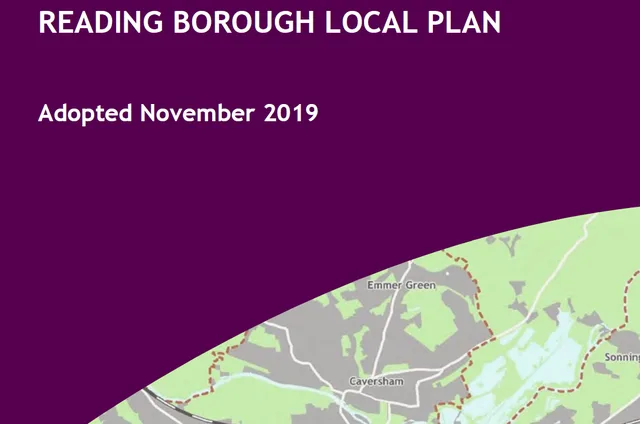
Reading is currently in the final stages of consulting on its Local Plan that will define how the town develops between now and 2036. The planning is also intended to include impacts on climate and infrastructure, so this is where you will find out what is being planned for everything from new roads and schools to doctors’ surgeries. It may seem dull and long and tedious, but if you live in Reading, it is probably the most important document affecting your civic life. It defines how everything will change and develop in our town over coming years.
The document was adopted in 2019, and you can already see many of its proposals being implemented. However, some problems seem unassailable – the IDR, the lack of a third bridge and the ongoing saga of ‘MRT’ or a busway from the station to Thames Valley Park.
Also, as the plan was being adopted the world changed. 2024 is very different from 2019.
More and more people are working from home and the need for large office buildings is much diminished. This has brought with it a wave of conversions of offices to flats, which do not need planning permission under Permitted Development rights. This has led to a spat between Reading Borough Council and Housing Secretary Michael Gove, with RBC being over-ruled in trying to restrict and control conversions. Much of Kings Road has already seen offices converted into flats, and even the M&G building standing on the site of the old Huntley & Palmers HQ is set for partial redevelopment as flats.
The rise of home shopping is a real challenge to retail outlets and we’re seeing a significant move towards repurposing shops as entertainment venues. Hollywood Bowl at The Oracle and a similar venture slated for Broad Street Mall are two examples of this.
It’s a very long and somewhat tedious document so we have summarised it for you (with some AI help):
The Reading Borough Local Plan, adopted in November 2019, is a comprehensive document setting out the policies and strategy for the development of Reading up to 2036. It addresses critical issues such as climate change, housing needs, economic growth, and infrastructure development. The plan declared a commitment to achieving a carbon-neutral Reading by 2030 and contains sustainability policies at the forefront of local governance in Britain. The plan acknowledges the town's economic growth and the associated challenges, particularly the acute housing crisis and the need for genuinely affordable housing. It emphasizes the need for employment space and infrastructure to support a thriving community while also taking steps to preserve and enhance the area's historical and environmental legacy. The vision for Reading is of a dynamic, inclusive community that is clean, green, healthy, safe, and desirable for living, working, studying, and visiting. The objectives of the plan aim to support this vision by promoting sustainable development, addressing housing needs, enhancing the quality of life, and protecting the environment.
There are specific sections covering plans for Central, East, South, West Reading and Tilehurst and Caversham and Emmer Green which may interest you if you live in one of these areas. You can read or download the full document below.
Why Have A Local Plan ?
The requirement for councils to prepare Local Plans in the UK has a long history, driven by social, environmental, and economic considerations.
The concept was introduced in the 1947 Town and Country Planning Act: This landmark act introduced the concept of Local Plans, requiring all local authorities to detail permitted development types and locations. This aimed to prevent uncontrolled urban sprawl and promote orderly development based on local needs and has subsequently been evolved in many subsequent legislation, including the 1968 Town and Country Planning Act; the 1972 Local Government Act; the 2004 Planning and Compulsory Purchase Act and the 2011 Localism Act.
Local Plans are intended to serve several key purposes, such as providing a blueprint for development; guiding decision-making; promoting sustainable development and engaging local communities.
However, Local Plans have also been used as a mechanism for central government to impose their authority on local authorities.
The Conservative manifesto of 2019 pledged to build 300,000 new homes a year in England by the mid-2020s. This became the overarching target until recently, where the policy was ditched in the face of a revolt from Tory MPs and their ‘not in my back yard’ electors. So, in December 2023, Housing Secretary Michael Gove announced revised planning reforms. Notably, councils would have more discretion in setting lower housing targets in their Local Plans. They could consider local circumstances, greenbelt protection, and community concerns, potentially impacting the overall target achievement.
Reading has easily reached its stated Local Plan goals in terms of planning applications in process or proposed. Wider questions are the impact on local economies, culture and infrastructure and concerning the provision of affordable housing and rental properties.


Comments
No comments yet. Be the first to share your thoughts.
Join the conversation
Log in to leave a comment on inReading.