
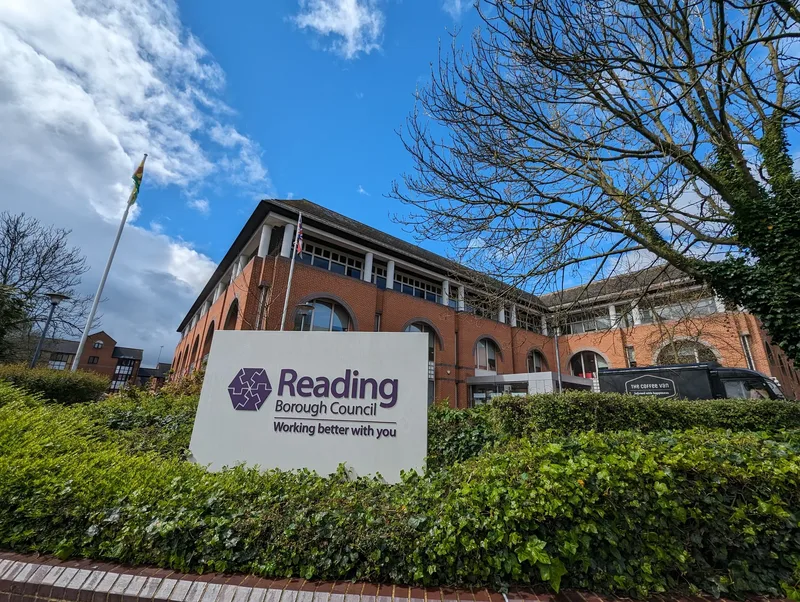
In our recent 1st April edition inReading spoofed the merger of several local councils, but it looks like the old adage that when you laugh you should look for a grain of truth has come true as Reading Borough Council this month made a very public play to bring the area to the west of the town under its control.
As West Berkshire seeks to merge with other Oxfordshire councils to form the Ridgeway local authority covering much of the Chilterns, Reading Borough Council’s proposals would see Purley-on-Thames, Calcot, Pangbourne, Theale and Tilehurst move from the control of West Berkshire Council to become part of Reading. And this opens the argument that integrating the swathe of the town that currently lies within Wokingham Borough Council would make even more sense.
So let’s take a more serious look at what fundamental changes may be ahead in how our community is run now that April 1st is well behind us.
It should be noted that, for a government already with its hands full, reforming local government in the Thames valley is nowhere near the top of the list for the Department for Levelling Up, Housing and Communities (DLUHC) (formerly more pithily known as the Ministry of Housing, Communities & Local Government - MHCLG). Local councillors have told inReading that they believe that any major reforms are two or three years away and may slip beyond the lifespan of the current government.
But this is now a live subject and expect a lot of coverage of this on social and traditional media in the near future as everyone jostles and jockeys. There will be locals up in arms and there will be fervent protests whilst many of you will wonder what the fuss is all about.
But, is this just rearranging the deck chairs on the lawn down here in Berkshire, or is there an opportunity to bring significant change that will improve our lives in Reading?
Well, here’s a deep dive into what the changes could mean.
Every decade or so it seems that an incoming government thinks it has a better idea for how local government can work and these latest plans are centred around two key ideas - devolution and local government reorganisation in the name of increased 'local democracy'. These changes are already being implemented in Cumbria, Cheshire & Warrington, Greater Essex, Norfolk & Suffolk, Sussex & Brighton and Hampshire & Solent, and there is a chance that Reading might become part of a Thames Valley or Berkshire wide authority.
In more details, the proposed changes were included in the English Devolution and Community Empowerment Bill, aimed at significantly shifting powers from central government to "Strategic Authorities”. If you're into detail, read on. If not, then skip to our Conclusion below!
The Detailed Potential Changes
As a unitary authority, RBC currently exercises both district-level functions (like waste collection, planning applications, housing, environmental health) and county-level functions (like adult social care, children's services, education, highways, strategic planning). It's a "single-tier" council responsible for almost all local public services within the borough and also participates in joint committees for county-wide services like the Royal Berkshire Fire and Rescue Service.
In the future, changes will depend on whether the town’s future is as part of a Strategic Authority (SA) – specifically, a Combined Authority (CA) or Combined County Authority (CCA). Yes, nice and complicated isn’t it ?
If Reading does not become part of a Strategic Authority (but could expand its size to the government target of 300,000 citizens) then we are likely to see the following changes:
Governance Reform: RBC currently operates a committee system. The Bill requires all councils operating the committee system to transition to the leader and cabinet model. This is a major internal governance change, shifting decision-making power to a smaller executive group and the council leader.
Local Audit Office: The establishment of the new Local Audit Office will change how RBC's finances are audited and overseen. While RBC will still be audited, the process and oversight body will be different – you may recall that Reading has a poor history of audits in recent times.
Neighbourhood Governance: RBC will have a new duty to put in place "effective neighbourhood governance." This means actively creating mechanisms to give residents a stronger, more direct say in shaping their local areas, even if there are no parish or town councils. This isn't just "good practice" anymore; it's a legal requirement and will benefit parts of town such as the Blake’s Lock area of East Reading, where housing has expanded but services have not.
Commercial Leases: RBC, as a landlord of commercial properties, would be affected by the ban on "Upward Only Rent Reviews" clauses in new leases. This would provide flexibility for the council to encourage more strategic uses for some of its properties.
However, without being part of a strategic authority, RBC would not gain the extensive new powers in areas like transport strategy, adult education, or strategic planning that SAs will receive, so it will largely be business as usual.
However, if Reading does become part of a Strategic Authority, this is where the biggest changes will occur. Reading would become a "constituent council" of a larger Strategic Authority (e.g., a "Thames Valley" or "Berkshire" Combined Authority, likely with a directly elected mayor). There are no current plans in place, but the leader of Slough Borough Council, Cllr Dexter Smith has recently said that a merger can be expected in “the next two to three years”.
As well as being rolled up with Slough’s bankrupt local authority, it would likely include Maidenhead, Wokingham and Bracknell, many of which are financially challenged. (It was announced this week that Wokingham is to lose £16m of central government funding.)
If Reading does become part of a Strategic Authority then locally we can expect to see some more extensive changes are powers are handed up to the 'SA', including:
Transport: While RBC would still manage local roads and day-to-day transport operations, the strategic direction for transport (e.g., developing the Local Transport Plan, bus franchising decisions, overall infrastructure investment) would move to the SA. RBC would have a duty to "act in accordance with" the SA's transport plans. Mayoral SAs, in particular, would control a "Key Route Network" with powers of direction over constituent councils' highway management on these key roads.
Adult Education & Skills: The responsibility for commissioning and funding adult education, currently a function of unitary councils like Reading, would transfer to the SA. RBC's "New Directions" adult education service, for example, would likely fall under the SA's remit or need to align closely with its strategy and funding.
Strategic Planning & Housing: This is a major shift. While RBC would still handle most individual planning applications, the SA (especially a Mayoral SA) would be responsible for developing a Spatial Development Strategy (SDS) for the wider region. Mayors would gain powers to direct refusal of strategically important planning applications, issue Mayoral Development Orders (MDOs), and establish Mayoral Development Corporations (MDCs) – powers that currently reside with RBC for its area. The ability to levy a Mayoral Community Infrastructure Levy (CIL) would also move to the SA.
Economic Development & Regeneration: The overarching responsibility for a Local Growth Plan and driving regional economic development would fall to the SA. RBC's current economic development initiatives would need to align with this broader regional strategy.
Health and Public Service Reform: The SA would gain a duty on health improvement and inequalities across its larger area, influencing how RBC's public health and social care services operate.
Public Safety (Police and Fire): If the Strategic Authority takes on Police and Crime Commissioner (PCC) and/or Fire and Rescue Authority (FRA) functions, then the current joint committees or local governance for these services (in which Reading plays a role) would be absorbed by the SA, potentially under the direct control of an elected mayor.
New "Duty to Collaborate": RBC would have a stronger, statutory duty to collaborate with the new Strategic Authority and its mayor on these strategic functions.
Fiscal Implications: While the SA would gain new funding streams (e.g., devolved skills funding, potentially new levies), RBC would be a contributor to the SA (e.g., through a "transport levy" if one is imposed). This changes RBC's financial autonomy to some extent.
Continuing Local Service Delivery: Importantly, RBC would still be responsible for the vast majority of day-to-day frontline services: waste collection, local housing management, children's services, adult social care, parks, libraries, council tax collection, environmental health, and processing most planning applications. The Bill emphasizes that Strategic Authorities will not replace councils.
The Conclusion
If all of this looks like complex and expensive changes to achieve very little, well, it’s difficult to argue against this. At a time when special needs and housing account for nearly three quarters of expenditure and housing developers run roughshod over the needs of local communities, perhaps there should be a more fundamental look at how local governance is failing. Instead we are likely to get pointless tweaks that will achieve little or nothing with additional layers of bureaucracy and cost.
As they say, watch this space.
Reading Borough Council are holding a consultation on their proposed boundary changes at Tilehurst Community Centre, 23 The Triangle, Reading RG30 4RN on Thursday, September 4 from 4pm-7pm.


Comments
No comments yet. Be the first to share your thoughts.
Join the conversation
Log in to leave a comment on inReading.