
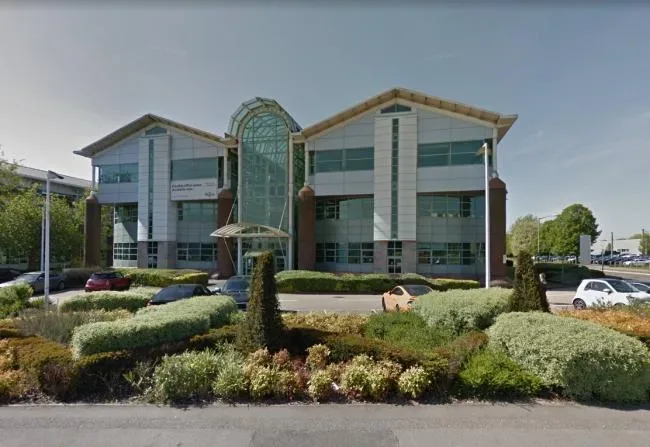
With Thames Valley Police's move from their Castle Street HQ to their new home at Atlantic House on the edge of town delayed over and again, this month we take a look at the history of policing in Reading.
The move was initially slated for March 2022, but lead contractors Midas Construction went into administration in January of that year and the new fitting company, Willmott Dixon delayed until 2023 then 2025 with the latest timescale seeing the first desks occupied this summer at a disclosed cost of over £11m. This is the next chapter of policing in our area, but where did it all start ?
The Formation Of A Police Force
Before the establishment of formal police forces, law enforcement in Reading, as in much of England, was managed through community-based systems. Local constables and watchmen, often appointed by parish authorities, were responsible for maintaining order. These individuals were typically part-time and lacked formal training, relying on community co-operation to uphold the law. Serious crimes were addressed by local magistrates, and punishments ranged from fines to public executions, depending on the severity of the offence.
In 1836, following the Municipal Corporations Act of 1835, Reading established its own police force, the Reading Borough Police. At its inception, the force comprised 30 constables, two sergeants, and two inspectors. Henry Houlton, a former sergeant from the Metropolitan Police, was appointed as the first chief constable in 1839.
Throughout the 19th century, as Reading’s population grew, so did the police force. By the late 1800s, the number of officers had increased to 62, serving a population of approximately 60,500. During World War I, the force’s establishment reached 113 officers; however, military enlistment reduced the active number to just 30 patrolling the town, only to steadily increase after the war.
After the Great War, policing in Reading underwent significant changes in response to social, economic, and technological developments such as the rise of motor vehicles. By the 1930s, traffic enforcement became a key responsibility, and the force expanded its use of radio communications to improve response times.
During World War II, the police played a crucial role in enforcing blackout regulations, managing air raid precautions, and dealing with wartime crime, including black-market activities and looting. The post-war years saw further modernisation, with new policing methods introduced to tackle organised crime, juvenile delinquency, and a rise in violent offences. The force also faced challenges related to post-war economic hardship, which contributed to increases in theft, shoplifting and public disorder that remain an issue to this day.
By the 1960s, the Reading Borough Police had integrated forensic science and expanded its detective units to improve investigative capabilities. However, as crime became more complex and the region’s population continued to grow, it became evident that local forces needed greater resources and coordination. This led to the 1968 merger, in which Reading Borough Police was integrated into Thames Valley Police, forming a larger, more structured force to serve the wider region more effectively.
Formation of Thames Valley Police
On 1 April 1968, a significant reorganization of local police forces led to the creation of the Thames Valley Constabulary, later renamed Thames Valley Police. This new entity was formed through the amalgamation of the five forces, Berkshire Constabulary, Buckinghamshire Constabulary, Oxford City Police, Oxfordshire Constabulary and Reading Borough Police
The merger aimed to streamline operations and improve efficiency across the Thames Valley region.
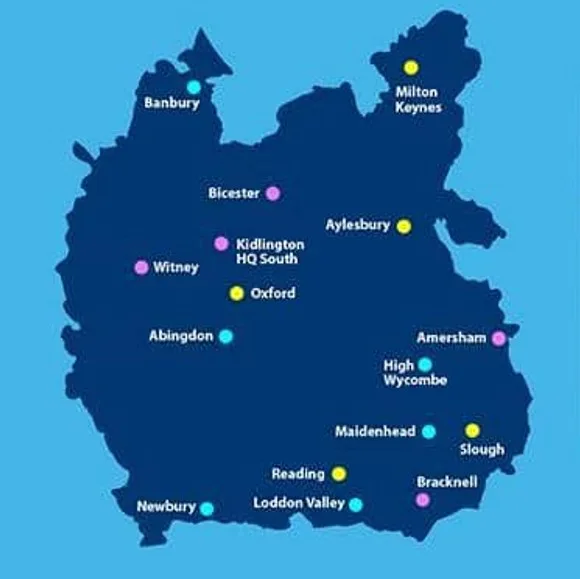
Today, Thames Valley Police serves the counties of Berkshire, Buckinghamshire, and Oxfordshire, covering an area of 2,218 square miles and a population of over 2.42 million people. It is the largest non-metropolitan ‘patch’ of any police force in England and Wales.
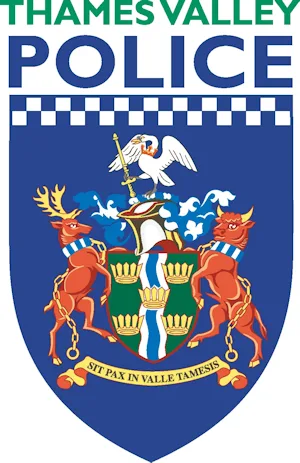
The force’s motto, “Sit pax in valle tamesis” (“Let there be peace in the Thames Valley”), reflects its commitment to maintaining safety and order in the region. The emblem incorporates symbols representing the three counties it serves - a stag for Berkshire, an ox for Oxfordshire, and a swan for Buckinghamshire. This emblem also features a blue river symbolizing the River Thames and five crowns representing the founding forces.
The Thames Valley Police Museum, located at Sulhamstead House, offers insights into the history of the force and its predecessor constabularies. The museum’s collections include items from the Great Train Robbery of 1963, uniforms, equipment, medals, and scenes of crime evidence.
Major Police Incidents In Reading
Amelia Dyer (“The Ogress of Reading”) (1896): Amelia Dyer was a notorious figure in Victorian England, operating as a “baby farmer” who took in infants for financial compensation. Over a span of decades, she is believed to have murdered numerous babies in her care, with estimates ranging from six confirmed cases to potentially hundreds. Her arrest in 1896, following the discovery of an infant’s body in the River Thames, led to her conviction and execution, marking one of the most infamous criminal cases in Reading’s history.
Great Train Robbery (1963): one of the most infamous crimes in British history, the Great Train Robbery occurred within the Thames Valley area. A gang intercepted a Royal Mail train, stealing £2.6 million. The investigation and subsequent arrests highlighted the challenges of policing large-scale organized crime.
Beenham Murders (1967): on 17 April 1967, nine-year-olds Jeanette Wigmore and Jacqueline Williams were reported missing in the village of Beenham, near Reading. Their bodies were discovered later that evening; both had been murdered. The case remained unsolved for decades until 2012, when advances in DNA technology led to the arrest and conviction of David Burgess, who was sentenced to life imprisonment for the murders.
Mary-Ann Leneghan (2005): the 16-year-old was abducted, tortured, and murdered in Reading. She and a friend were kidnapped by a group of men, taken to a hotel where they were subjected to prolonged assault, and later transported to Prospect Park. There, Leneghan was fatally stabbed, while her friend was shot but survived. Six men were subsequently convicted and received life sentences for their roles in the crime.
Forbury Gardens Terror Attack (2020): on 20 June 2020, a tragic event unfolded in Forbury Gardens, Reading, when a man carried out a stabbing attack, resulting in the deaths of three individuals and serious injuries to three others. The perpetrator, Khairi Saadallah, was apprehended shortly after the incident. The attack was later declared a terrorist incident, leading to a comprehensive investigation by counter-terrorism police. In January 2021, Saadallah was sentenced to a whole-life term for the murders.
https://www.police.uk/pu/your-area/thames-valley-police/abbey-battle/?yourlocalpolicingteam=about-us

Comments
No comments yet. Be the first to share your thoughts.
Join the conversation
Log in to leave a comment on inReading.