
Reading doesn't really lay claim to many personalities. There are some top thespians, Oscar winners Kate Winslet and her ex- Sam Mendes are Dings, and we can claim Sir Kenneth Brannagh from the age of ten. Then there's Ricky Gervais, of course, plus Jeremy Kyle and Chris Tarrant.
You probably have to go back to William Marshall in the 13th century to find a character of global importance (look him up or cross Caversham Bridge and read the plaques). I'm not sure we can appropriate Jane Austen either, even though she also went to school here in her teenage years. Then there's Paddington, whose author Michael Bond was of this parish (I await angry postcards from Darkest Peru).
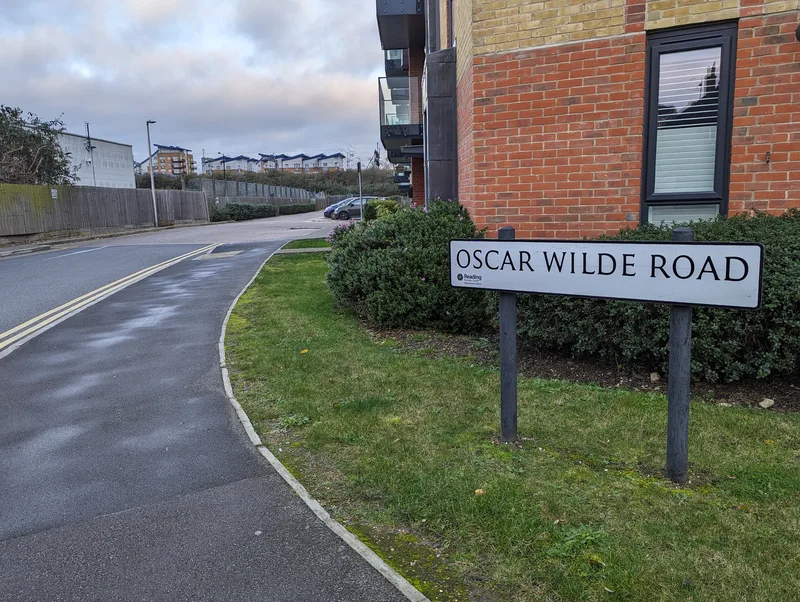
So it's hardly surprising that Reading has tentatively adopted writer, poet, wit and gay icon Oscar Wilde as its own. But given that he spent the most miserable time of his life here, it does make you wonder what the raconteur's own thoughts on this situation might be, especially if he saw the rather shoddy treatment of his name around the town.
Oscar Wilde was one of the most famous playwrights and personalities of the late 19th century. Known for his biting wit, flamboyant style, and controversial lifestyle, he left an indelible mark on literature and culture that prevails to this day.
Oscar Fingal O'Flahertie Wills Wilde was born in Dublin, Ireland on October 16, 1854. His father was a renowned surgeon and his mother was a poet and literary hostess. Wilde studied classics at Trinity College, Dublin and later attended Oxford University. There, he became involved in the aesthetic movement, which emphasized the importance of beauty and art for art's sake.
While at Oxford, Wilde won the prestigious Newdigate Prize for his poem "Ravenna." He moved to London after graduating and published his first collection of poetry in 1881. Wilde gained notoriety for his dandyish outfits and razor-sharp wit. His most popular works include the novel The Picture of Dorian Gray, his collections of children's stories, and the plays An Ideal Husband and The Importance of Being Earnest.
Wilde embraced his role as a cultural provocateur. He believed in art's ability to shock and felt no subject was off limits, including sexuality, morality, and Victorian social mores. This artistic boldness would ultimately lead to his downfall.
Ironically, his relationship with our town pre-dates his incarceration. At Reading Museum in the Town Hall, you can see a Huntley & Palmer's buiscuit factory visitors' book with the signature of Oscar Wilde dated 22 September 1892. The Wildes were family friends of Walter and Jean Palmer. He attended literary parties in the area, went boating, and enjoyed the experience so much that in 1893 he spent the summer in Goring.
Around this time, Wilde entered into a relationship with Lord Alfred Douglas, the son of the Marquess of Queensberry. When the Marquess publicly condemned Wilde for homosexuality, Wilde filed a series of unsuccessful libel lawsuits against him. During this period, Wilde also endured public accusations about his relationships with younger working-class men.
Wilde was eventually arrested and convicted of "gross indecency" in 1895. He was sentenced to two years of hard labor in Reading Gaol.
After passing through several other prisons, including Newgarea and Pentonville, Wilde arrived at Reading in November 1895 and was confined to Cell C.3.3, a small cell with only a plank bed and a shelf. The harsh conditions and isolation took a severe toll on Wilde's physical and mental health. In one letter, he described Reading Gaol as "this tomb for the living."
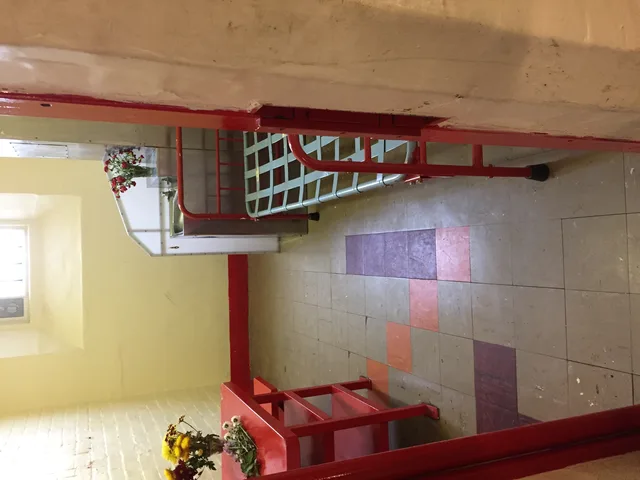
Oscar Wilde's cell in Reading Gaol, somewhat dressed up
Under the strict rules of the time, called the 'Separate System', newly arrived prisoner would only have been allowed one visit and one letter every three months and he would not have been allowed a pen, ink, paper or any book other than the bible. Wilde would have worn a uniform with arrows printed on it. The arrows denoted that the prisoner was now 'government property'.
At the time Wilde was imprisoned, every prison had a visitors committee, which could visit the prison at any time and inspect and award punishments on prisoners over and above the authority of the governor. Luckily for Wilde, in 1895 the visiting committee at Reading Prison included Wilde's old friend George W Palmer, the eldest son of George Palmer, a founding partner of Huntley & Palmers. As a result, Wilde enjoyed favours - he was allowed to write, although he was only given small amounts of paper which were returned to the warder at 8pm every evening. Wilde also befriended a warder on C-wing, Thomas Martin, an Irishman who was to become a very close friend of Wilde's and called him 'The Poet'. The warder supplied him with Huntley & Palmers ginger biscuits and also brought him newspapers.
It was during this prison sentence that Wilde composed one of his most famous works - De Profundis, a long letter addressed to Lord Alfred Douglas. The reflective letter chronicles Wilde's spiritual journey and disillusionment. Portions of De Profundis were later published after Wilde's release from prison.
In January 1897, after serving his full sentence, Oscar Wilde was finally released from Reading Gaol. He immediately went into exile in France, living out the last few years of his life under the pseudonym Sebastian Melmoth. There, he wrote The Ballad of Reading Gaol, a poem reflecting on the execution of Charles Thomas Wooldridge in 1896. It was one of Wilde's last works published in 1898.
Although Wilde's time in Reading was undoubtedly traumatic, it also inspired some of his most introspective and influential writings. The stark Reading Gaol cell where he suffered so greatly has now lain empty and neglected for a decade (apart from one marvellous exhibition) thanks to the incompetence of the Ministry of Justice, and his legacy in our town is curious.
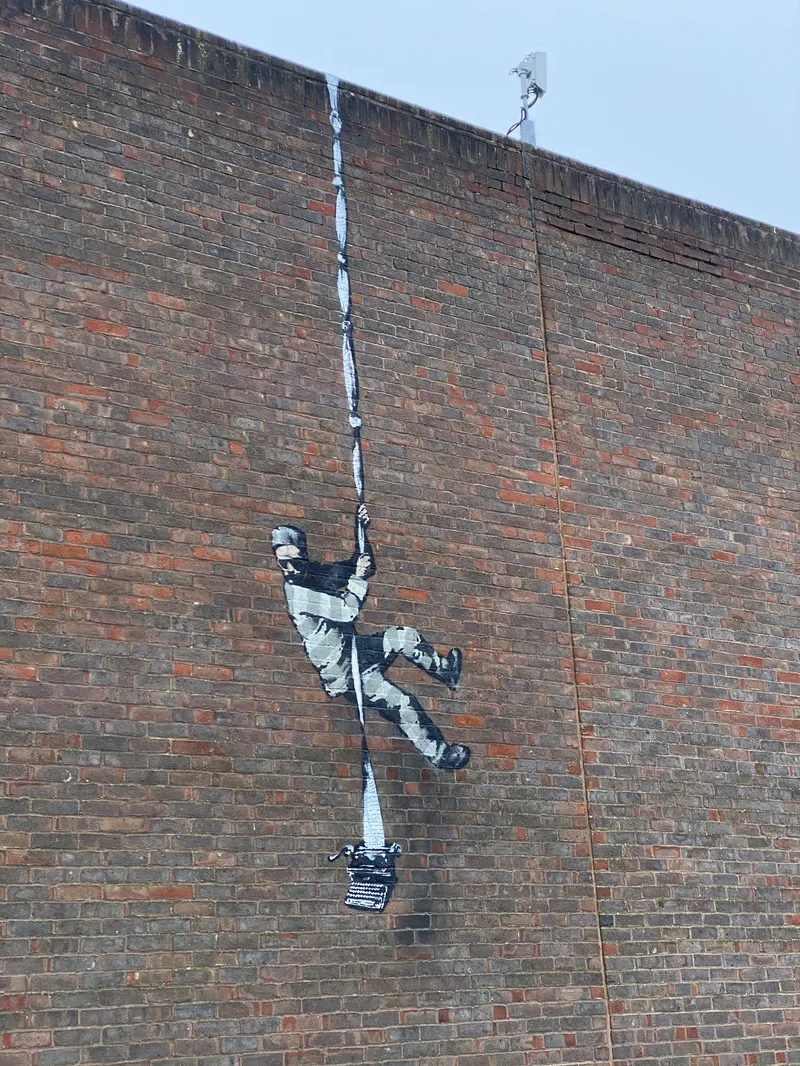
The Banksy on the walls of the prison famously features a typewriter (of which Wilde said: "The typewriting machine, when played with expression, is no more annoying than the piano when played by a sister or near relation.") in homage to him.
Oscar Wilde Way is a rather sad cul-de-sac of moderns flats leading up to the railway line. A dreadful 'sculpture' sits on the roundabout at its end.
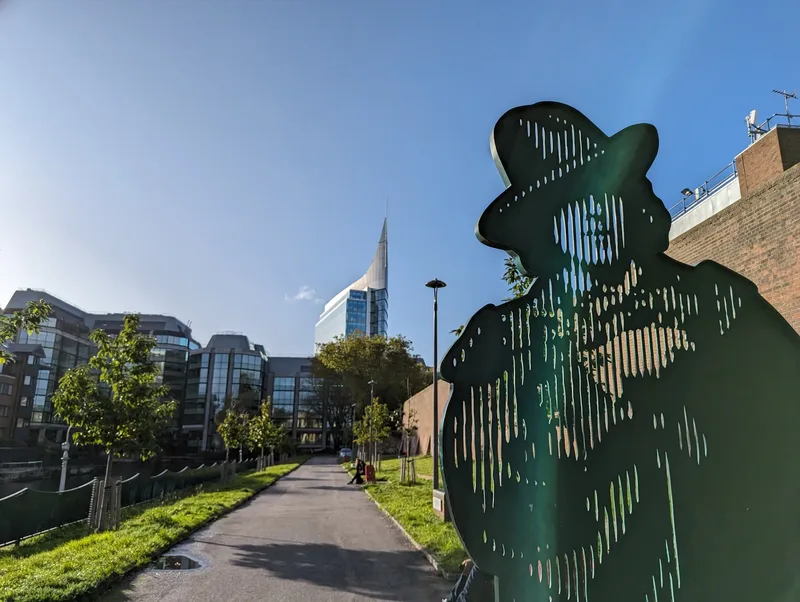
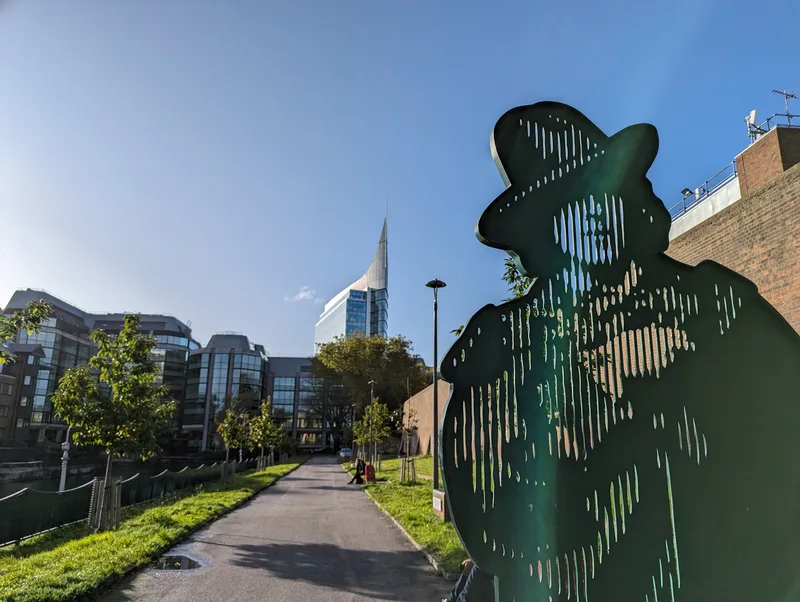
The gates on Chestnut Walk feature some fine silhouettes, and that's it. On reflection, it is unlikely that Widle looked back fondly at his association with a town that went on to co-opt, if not adopt him, but it did inspire some great work out of his hardship and suffering.
CHRONOLOGY OF READING PRISON
1786: the first Reading gaol was built on the Ruins of Reading Abbey.
1844: a new gaol is built on the site of the old one at a cost of over £40,000.
1865: in-cell sanitation is removed, not to be replaced until 1990.
1916 to 1920: the prison was an internment camp for enemy aliens and spies.
1916 to 1937: many high profile Irish prisoners were held at Reading prison, including future Prime Minister of Ireland, WT Cosgrove, founder of Sin Feinn Aurthur Griffiths, and Terence McSwiney, the IRA prisoner who survived for the longest on hunger strike - a total of 74 days.
1925: the prison was used as an Army Surplus Store
1936: prison used as the Berkshire Driving Test Centre
1939: The gaol become the County Censor's Office responsible for the checking of all news prior to publication at the outbreak of World War II.
1943 to 1946: the prison was used as a secret Canadian Military Detention Barracks
1951: Reading becomes one of the first Borstal Correctional Centres.
1992: Reading becomes a Remand Centre for Young Offenders
1996: Reading becomes a HM Remand Centre and Young Offender Institution
2013: The Prison is closed and mothballed
The Ballad of Reading Gaol
https://www.poetryfoundation.org/poems/45495/the-ballad-of-reading-gaol
De Profundis
https://www.gutenberg.org/files/921/921-h/921-h.htm
Comments
No comments yet. Be the first to share your thoughts.
Join the conversation
Log in to leave a comment on inReading.